
The Transmutational Power of the Physical
Retrograde is all about the physical. From the start, I’ve been creating Retrograde with the goal of seeing my writing and illustrations realized in a physical booklet which I print and bind. This isn’t just because I enjoy letterpress printing and bookbinding – it’s because the stories that I am trying to tell with Retrograde use letterpress printing, bookbinding, and analog communication of all kinds as a main part of their content. I believe that those stories will be elevated if the physical vessel embodies and expresses that content. This idea is a key part of my aesthetic: the forms in which we tell stories intrinsically influence the stories we tell, and the way that a story is physically conveyed can be utilized as a key element of the story itself. I like to imagine people receiving their zines and almost wanting to believe that this is an actual artifact from the world of Retrograde, as if it had crossed over from a parallel universe.
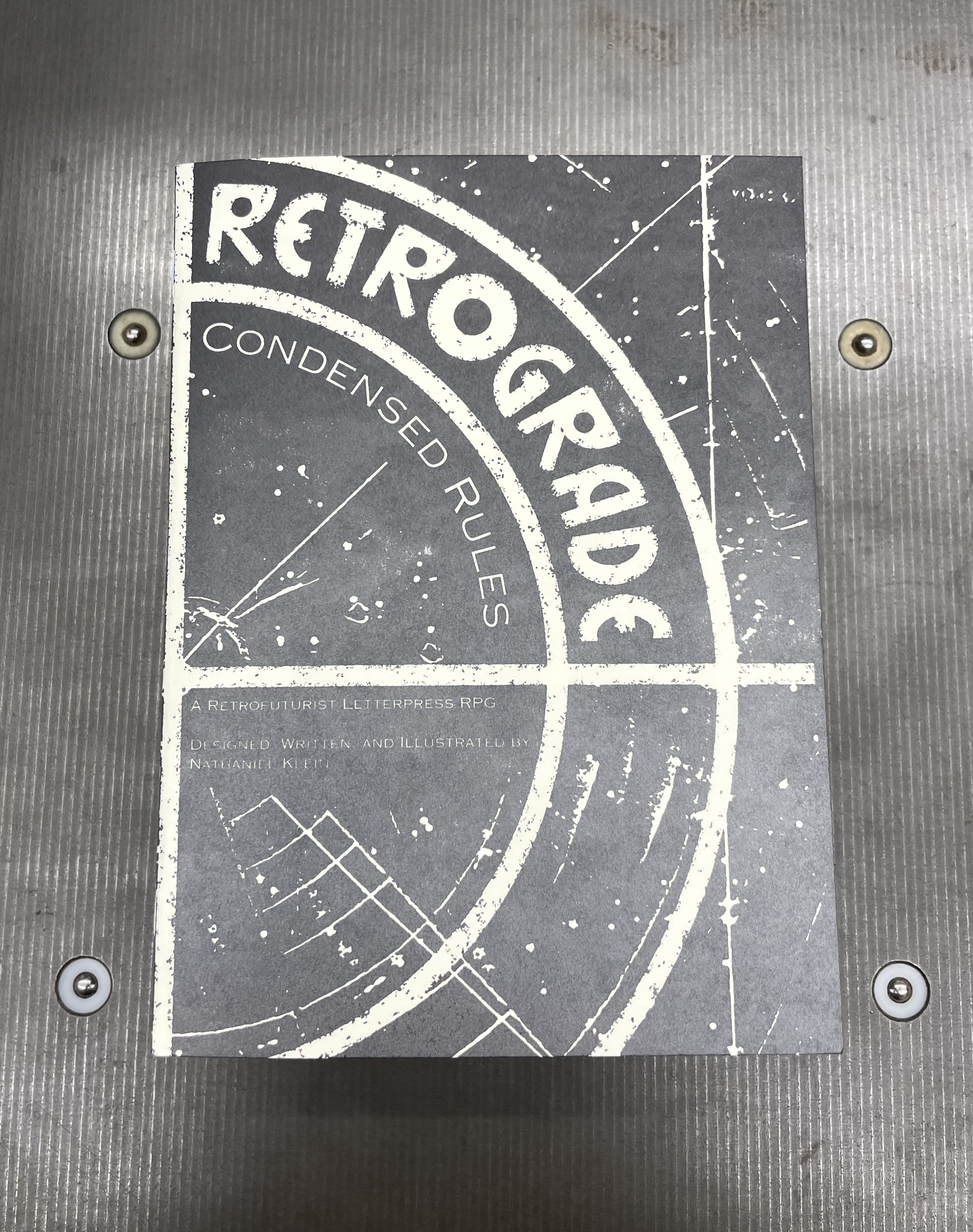
Retrograde imagines a future where human civilization is primarily connected by print culture. Faster-than-light travel is made possible by an arcane process called Blood Ink Teleportation, colloquially known as “Blinking.” The blood of human mutants, known as Blinkers, is mixed into an alchemical ink which, when used to print star charts, teleports the printing press to the exact position indicated by the star chart. Starships are built to be massive printing presses, printing huge, ultra-detailed star charts to ensure the accuracy of the teleportation. Humanity is able to establish colonies on worlds hundreds and thousands of light-years away from each other, but as a consequence, radio communication or digital communication of any kind between human worlds is impossible. Instead, starships routinely carry newspapers between far-flung worlds, with Blood Ink Teleportation allowing the physical to travel faster than the digital.
The future as imagined by Retrograde is implicitly influenced by many works, mediums, and genres that have long fascinated me, and those influences have propelled past works of mine as a writer and theatre artist, but there are a number of influences that run particularly deeply through Retrograde:
Alchemy and fiction pertaining to alchemy, especially as expressed in magical realism by writers such as Jorge Luis Borges, but also as imagined by Medieval Ritual Magicians
20th century science fiction of all kinds, but especially the literature of Kurt Vonnegut and Philip K. Dick, films like Zardoz and Alien, the game Warhammer 40k, Frank Herbert’s Dune, and Rod Serling’s The Twilight Zone.
Roleplaying games, especially analog tabletop RPGs such as Mothership, Dialect, and Outcast Silver Raiders, as well as certain digital RPGs such as Disco Elysium
Printmaking traditions of all kinds, especially the revival of Letterpress as an artisan craft in the 21st century.
I’ve been interested in “analog” as a concept for a long time, but recently I’ve come to see analog as a nexus of my other fascinations – alchemy, printmaking, science fiction, and roleplaying games – all of which intertwine in Retrograde. While implicitly my inspiration for Retrograde and the process of its creation would be impossible without any one of these varied interests, I am curious what I could discover by trying to articulate where the connections between Retrograde’s inspirations come from and what those connections mean.
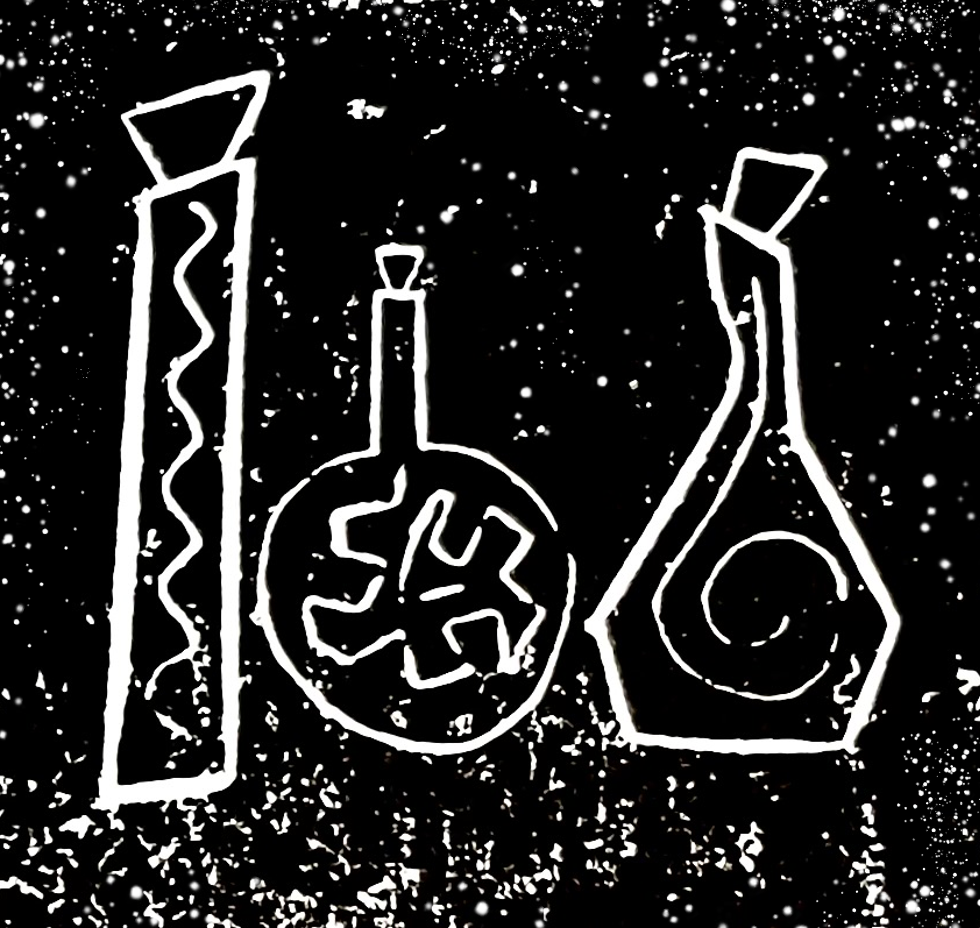
Roleplaying games readily serve as an analog nexus for my interests: a strong zine culture has developed around RPGs, igniting my passions as a printmaker and bookbinder, and the sci-fi and fantasy worlds I love to read in fiction are frequent subjects of RPGs. The content of RPG narratives, the physical expression of those narratives, and the overall experience of the form
Analog is a critical part of this: the experience of scrolling through a pdf is different from flipping through a tome, just as the experience of sitting in the same room to play together is different than logging onto Discord and turning on your webcam. I am so focused on Retrograde’s analog dimensions that I’m not going to sell digital versions of Retrograde – I will make pdfs of my zines available for free online, but I’ll be doing that primarily as a way for people to understand more about what they’re getting if they buy the physical, analog copies of Retrograde.
I want to think about this idea of a “copy.” I think of a copy as a perfect clone of something; something that is discernible from the original is not a copy. It might be an imitation, or an imperfect copy, but oftentimes it is a discernible edition, and I typically think of each edition in a series as unique. This is a big part of analog printmaking – the discernibility of individual editions as distinct and unique artifacts rather than merely copies of an original. In my printmaking practice, every print is an original, because every print is unique; if my linocut art did have an “original,” it would be the printing block I carve, but that block is not itself the art product, merely a tool I use to create the art in just the same way as a paintbrush is the tool a painter uses to create their art.
This is important to roleplaying games because every game is distinct and unique. While each game can be played with the same rules and may even use the same pre-written adventure module, the input of the players and game masters will inevitably change the course of the story, making everyone’s game much more than merely one path in a pre-written list of possibilities. The main variable in an RPG is the people. Add in the random chance given by the roll of the dice, and every RPG experience is truly unique; thousands of people could play the same RPG adventure and would be able to share completely different experiences with each other.
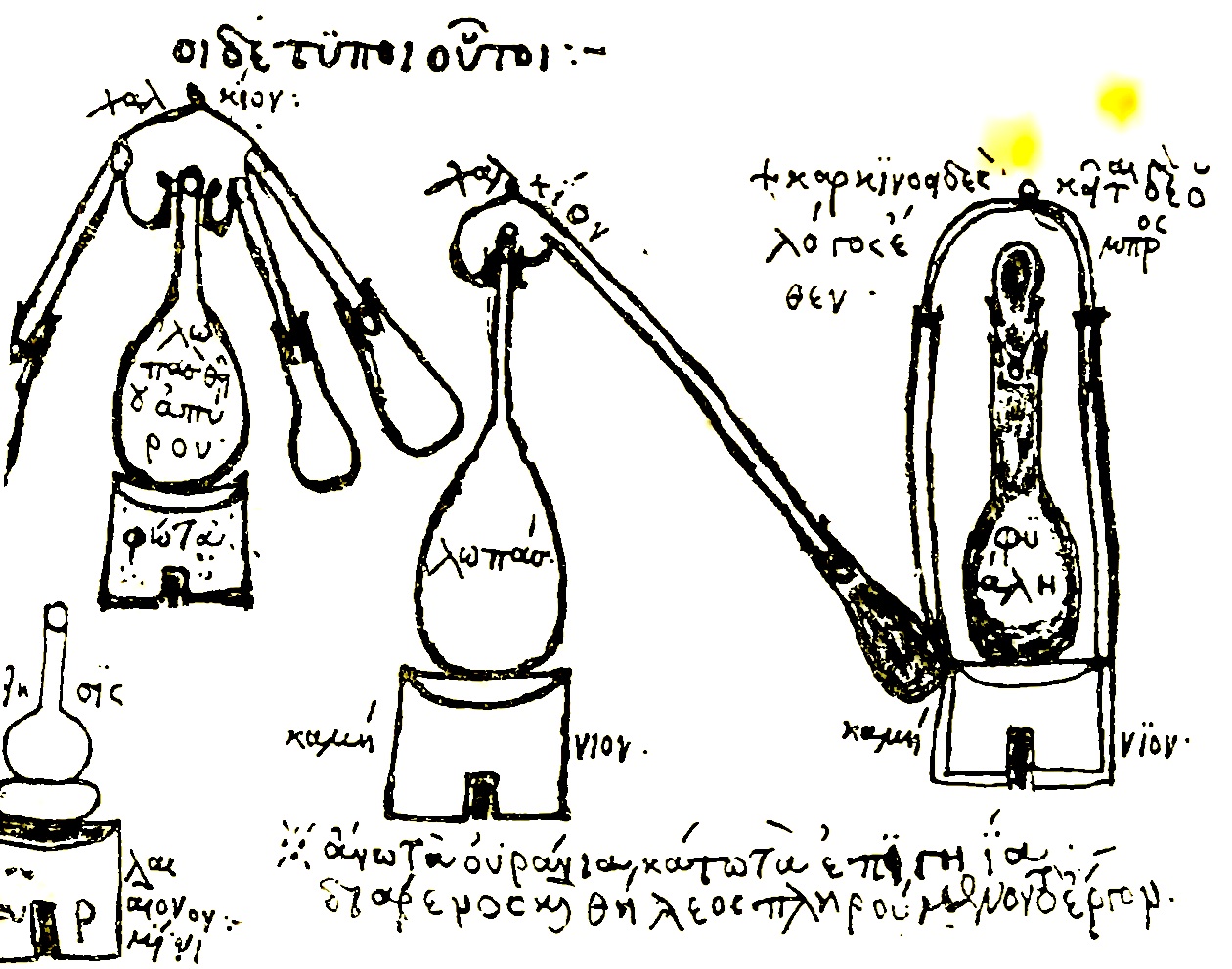
People, then, are at the heart of my interest in analog. It is not merely about the physical, but the handmade, the human-made: there is a power in creation, a power I believe the ancient alchemist Zosimos of Panopolis understood when he chose the word Cheirokmeta to name his alchemy, a word meaning “things made by hand.” Analog allows me to transmute my varied interests – alchemy, science fiction, roleplaying games, and printmaking – into something tangible, unique, and unexpectedly unified. There is something about Retrograde that “makes sense” to me, an implicit internal logic that necessarily underpins all of my work on the project. It’s my hope, and my sincere suspicion, that Retrograde will “make sense” to other folks, too – please tell me if I’m wrong, but if you’re reading this, I suspect that the analog nexus of past and future, of science fiction and magical realism, of physical communication and community that Retrograde embodies has captured some part of your imagination in the same way it has captured mine.
Going beyond the specifics of Retrograde, focusing my work on the analog feels like a way to explicitly cement a human feeling in art. In a world increasingly invested in AI, where communication and community are increasingly diluted and siloed by algorithms, making the time to come together with friends and make new ones by sitting down and playing games together feels like a beautiful way to find human connection. While the world of Retrograde is a darker vision of the future, I hope that the actual act of playing the game encourages people to imagine how they might go about making a better future for themselves and their community – finding ways to communicate intentionally and share joyful and transformative stories through collaborative creation. This idea of direct human connection is the story I am trying to tell; Retrograde’s analog experience is the way I am trying to tell it.
I intentionally did not define “analog” here, but I intend on writing more about my fascination with analog soon, and how it fits into my creative aesthetic, the community I hope to build with my art, and my overall intentions as a maker. In the meantime, I’d love to hear your thoughts on the potential for analog to serve as a nexus between different ideas and kinds of stories – is there something specific about analog that allows it to function as a creative nexus, or is that merely the nature of art and all creative mediums? I’m eager to hear your thoughts, and if you’d like to see more of what I mean when I write about analog, you can see the process of physically creating Retrograde on my instagram, follow Retrograde’s Kickstarter page, and check out an (admittedly digital!) early access version of Retrograde’s rules on DriveThruRPG.
Thanks for reading!
–Nathaniel
 The Library of Zosimos
Leave a comment