
Uncovering the makings of the present in my past
Last week at my parents’ house for the holidays, I went digging through their basement for old books of mine – I have a small treasure trove of tomes squirreled away, and I managed to recover a particularly interesting book: Wizards by P.G. Maxwell-Stuart, a scholarly text exploring the character of the ritual magician. Wizards was a text I read for a history class that further propelled an interest in alchemy I had acquired from Jorge Luis Borges’ fiction, and I can draw a direct line between those literary encounters and key elements of Retrograde.
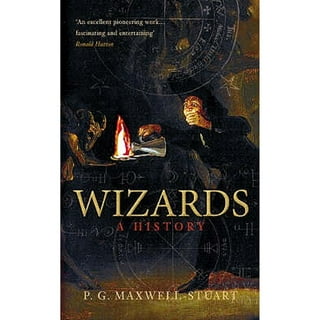
Wizards and Borges also featured in a presentation I gave on the inspirations behind my theatrical work in my senior year of college. In the spirit of the new year, I want to share this written artifact of my past with you; it’s a curious glance at the ways my work and my inspirations compound upon themselves in a messy palimpsest. If you’re willing to tolerate some language clumsiness and the specificities of a speech written for the benefit of the theatre faculty of a small liberal arts college in rural Tennessee, you will see early expressions of many themes I have articulated in this blog. And if you haven’t read or seen Sarah Ruhl’s Eurydice, I strongly suggest you do.
Pulling on Loose Threads: Creating the Unreality of Eurydice, April 12, 2022:
Sarah Ruhl’s Eurydice is probably the sharpest, cleanest text I have yet to direct. Ruhl’s language is masterfully precise and has an amazing versatility, finding moments of poetry in the seemingly banal and evoking incredible images with the simplest of phrases. From my first read, I loved Ruhl’s Eurydice in how perfectly it functions as mythmaking, not merely reimagining a myth in our present day, as so many modern retellings seem to do, but truly finding a new but totally organic expression of the ideas presented in those myths, bringing to it new wisdom and knowledge humanity has learned since the myth of Orpheus and Eurydice was first articulated over two thousand years ago. I saw a special opportunity in Sarah Ruhl’s work to strike at something truly universal, and I saw that I could bring it to life in a way that encompassed my greatest passions and fascinations.
I set about approaching Eurydice not as a modern retelling, but as the true occult history of Eurydice and Orpheus, with Eurydice’s father being the perfect expression of this: a figure somehow lost completely to time, yet whose magic enables the entire story to unfold. To articulate this magic, I looked at strands of magical activity which arose in Greek antiquity and continued to be articulated across the rest of human history: alchemy, hermeticism, and ritual magic. I have been interested in such esoteric threads since I first discovered the magical realist works of Jorge Luis Borges in high school, and his exploration of magical worlds and the often fungible borders between reality and unrealities have been a constant inspiration in my work. Ruhl’s Eurydice is brimming with magic in its embodiment of the underworld and how the characters flout the rules of that world and its great unreality, death, along with the colorful anachronisms that hum with life throughout the play: all it needed was an articulation specific enough for us to grab hold to, while still being open enough that we could ascribe anything we needed to it to best serve the play.
P. G. Maxwell-Stuart’s Wizards was an extremely helpful text for this, outlining the methodologies and objectives of ritual magicians throughout history. This book and the lines of inquiry it lead me along influenced greatly the visuals of the piece and the character direction: Alchemists and wizards like John Dee, Cornelius Agrippa, and, yes, Zosimos of Panopolis, greatly influenced my concept for Eurydice’s father. I articulated Father as an alchemist whose quest for immortality resulted not in him achieving it, but in learning the language of the dead, a knowledge which gradually sapped Father’s life the more of it he learned. This knowledge of the language of the dead allowed Father to retain his own language even after arriving in the underworld, and allowed him to look up into the land of the living like an astronomer and follow Eurydice’s life. We also combined the idea of Father as an alchemist with a notion of a magical engineer à la Daedalus, articulating an aesthetic I started calling Icaruspunk, a da vinci-esque sendoff of the greek myth. All of these ideas coalesced in the rehearsal room when we devised the foundation of what would become the string room construction scene: I realized that Father was literally, physically giving his memories to Eurydice to help her to remember who she was, which we could embody in Father’s costume by having him unravel parts of his costume and use that string to construct the string room. This became the touchstone of the play for me, the prime locus of the piece’s magic and the image that reverberated in my head.
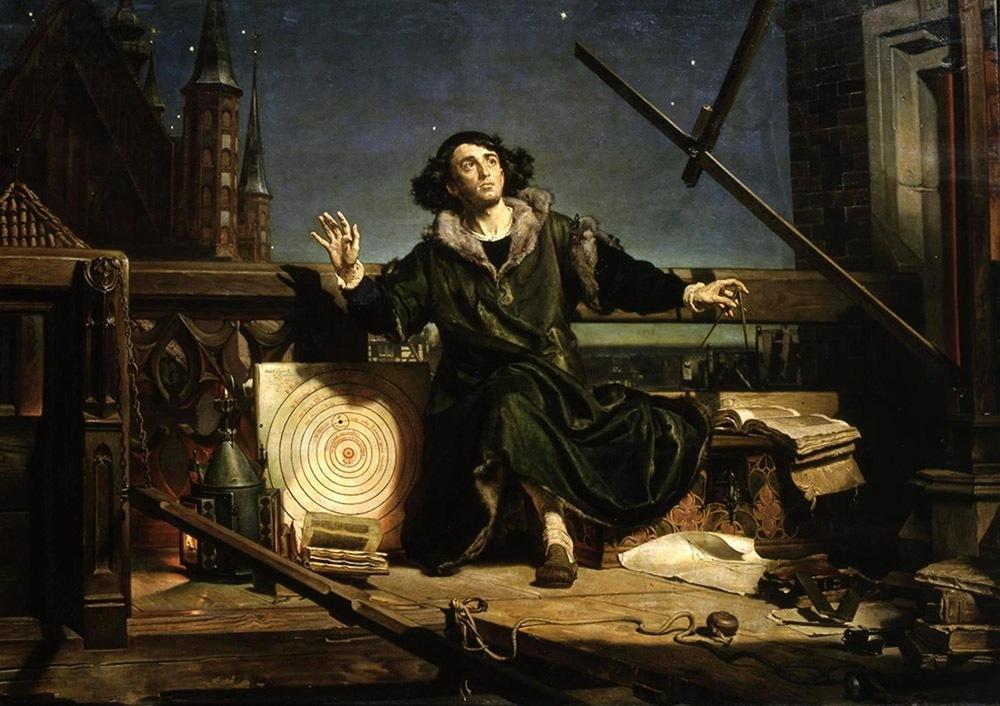
Magic from antiquity was also a critical component of how I articulated the underworld of Eurydice. An early thought of mine of an underwater library soon articulated itself as a kind of Atlantis, easily scryed from the water motifs running throughout the text. The text contains numerous stipulations for elements that, by the nature of their specificity, recall a general impression of the past or memory, such as the stipulation of Orpheus and Eurydice being dressed in swimsuits from the 1950s. I wanted to play a bit with the exact specificities while still achieving the evocation of the past: Art Deco jumped out to me as an artistic movement which would effectively achieve this and might well carry an imposing, even diabolical character to it perfect for an underworld. And it just so happens that when you put together Art Deco and Atlantis, you get the video game Bioshock. Now, while I was nervous about getting too sucked into this aesthetic, the possibilities it offered really were too good to pass up. Concept art from the game was simply stunning, and formed my jumping off point for the set: the game’s Bathysphere was a prime inspiration for our elevator. I was especially happy with how the text’s provisions for a water pump and rusty pipes led us to Orpheus’ arch, and the team that built the physical world of the play and lit it in brilliant colors did an amazing job bringing such amorphous magic into such stark relief.
Along with Art Deco, I thought Art Nouveau would be effective at achieving an evocation of the past. Along with being strikingly beautiful, Art Nouveau offers a softer aesthetic contemporary with Art Deco, and by giving Eurydice’s costume an Art Nouveau flair in the vein of the Czech artist Alphonse Mucha, we would be able to identify her apart from the land of the dead created by the Lord of the Underworld.
All of these elements were floating around in a bit of a miasma: I loved all of them, and while I did think there was real synergy between them, all of these components came from very different worlds. I looked at sound as a great unifying element for the piece, and by placing soundscapes underneath all the scenes, I would be able to show the strands connecting the land of the living to the land of the dead and set up the text’s truly spectacular moments, Orpheus throwing open the gates of hell with nothing more than its voice, and the moments of looking back that have taken their place in unforgettable myth, where finally all of that sound and movement cuts suddenly into silence. While there were a few kinks that never quite got worked out, for the most part I think those soundscape bridges succeeded, helping define the magic and the rules of the different worlds of Eurydice and emphasizing the power of those rules being broken and that magic being exercised and undone.
Just as there is a profoundly powerful magic running through every page of Eurydice, I felt a special magic every night in our rehearsal room: our piece coming to life as a living, breathing thing, one that sometimes we wrestled with, that sometimes we let run free, but always, always was it astounding to me. Along with being incredibly sharp and precise, Eurydice is also the most abstract text I’ve worked with as a director. The possibilities for this piece are limitless, so much so that before my first rehearsal, they were daunting to a point of near paralysis. But once we had gotten a handle on the magic, pieces seemed to fall into place: the movement work, particularly the complex environmental change brought about by the stones, developed through iteration and experimentation spurred along by devising methods of viewpoints and moment work. While you always hope to get to a point of familiarity where you are mostly flying by instinct with a play, I became aware of something a little less normal starting to happen, at least on my end: a series of coincidences that had no discernible explanation to them. I had found a song sung in Portuguese on a google play radio station that I had been listening to for weeks before realizing that it would be perfect for the song that plays in the Nasty Intereting Man’s apartment, defined in the script as Brazilian mood music. A perfect fit already, and good luck on my part that my casual music tastes led to an artistic solution. It was only two weeks before our opening that I actually looked up a translation of the song’s lyrics, in which I found that it’s chorus translates roughly to “let the ritual turn.” Let the ritual turn. The ritual of life into death, performed by Father in his learning of the language of the dead, performed by Eurydice as she falls down, down, down to the underworld, performed by Orpheus to bring his love back from the gates of hell. The more I looked, the more and more I saw bits and pieces from all my years had been poured into this piece. The Mucha art I had first been exposed to in Prague the summer after my freshman year. The rough shape of the sephirot of Kabbalah I had first come across in Borges stories manifested in the set’s floor plan. My own childhood love for fish and the ocean mirrored in Eurydice’s. The esoteric research which fueled my very concept hand in hand with Orpheus’ own occult consultations of the almanacs, the footstools, the architects. And a plethora of secrets whispered in my own dreams. These coincidences unraveled into a current that, though we be aware of it or not, runs through us all, and in the many quests across Ruhl’s script to probe the boundaries of impossibility, to put back what cannot be put back again, and to hold to the pulsing heartbeat of love for dear life, it was as if I felt the sum of my life staring at me across the stage.
On some level, this is just how humans work, the total sum of our experiences so vast as to be untraceable, and yet when we need it, we are able to conjure up such deep reservoirs of memory, access stores of knowledge we were not even aware we had. But I think there is something particularly magical about our own particular art form, something that makes those transmutations of the collectivity of our past more facile, more tangible, something that we can share.
I see a mechanism here which is not explainable by scientific means. That’s why we make art, isn’t it? Because there are things in our lives, in our world that cannot be quantified with numbers, that cannot be understood by discursive secondhand, things whose meanings cannot be divined by conscious artifice, yes, not even by language. We all know this: if language was enough, we would have no need for theatre: we would all become writers or spoken word poets. There is a holistic effect of theatre that I don’t think any other art form can reach: the total fabrication of a world, that is sustained in the distance between the physical embodiment of a text, the play’s technical elements and actors, and the audience’s imagination. In that distance, in that empty space, there is room for a special knowledge from deep in our subconscious where a magical kind of transmutation unfolds: a connection not only from one person to another, but to people across time and space throughout all our history of human endeavoring. That is why we do theatre. So that we may grasp at knowledge of living other lives, and connect our own small spark to a roaring fire of humanity. There are countless ways of using our petty human language to approach this, but I think if you all keep coming back to rooms like this for as many years as you have, you know exactly what I am speaking to. I will offer my own articulation of this kind of empathic knowledge by appropriating a word from antiquity: Gnosis. A revelation of our universal interconnectivity. That’s what I found when I pulled the loose threads of this text as far as they would go.
Reading through my own words, it’s curious to see how I fixate on certain forms. In college, life revolved around theatre, but now I only work on one or two plays a year. At the time of writing this presentation, printmaking was only a nascent interest – I hadn’t even carved a lino yet. Now, printmaking propels my work and letterpress is a key part of my weekly routine. And yet, I still love Borges and Wizards. I still love Art Deco and Art Nouveau and Mucha. I still often awake to great inspirations from my dreams. As much as my life and my work have changed from the three years since I wrote this script, there is a constancy in many of my inspirations, a constancy which reflects how important creating art is to me.
I don’t think my younger self is wrong that theatre can accomplish things that no other art form can accomplish, but today I can say that this is true of every form of art: every artistic discipline has specific and unique properties that allow it to accomplish things no other form of expression can. Evidently, one of my key interests in theatre was and is its ability to combine different art forms into a unified whole; just as analog printing is a valuable creative nexus that can combine and elevate multiple artistic mediums, so too is theatre.
I used to be confused about why my interests go in so many different directions, why I bounce between different mediums and try to combine things that seem like they have no business interacting with each other. Occasionally, I still confuse myself. But this presentation offers some good reminders about what I am working towards with my projects: Retrograde is the next step in a personal artistic tradition of exploring interdisciplinary, transformative art, a tradition that is ultimately about exploring human connection and finding new ways to reach and understand others, no matter how tenuous or unexpected they may be. I hope that Retrograde, with the interactivity of its narratives, is my most effective work yet at fostering those human connections, and I hope that when you read Retrograde and hold its booklets in your hands, you feel a nexus not only of art and storytelling, but a coalescence of years of inspirations.
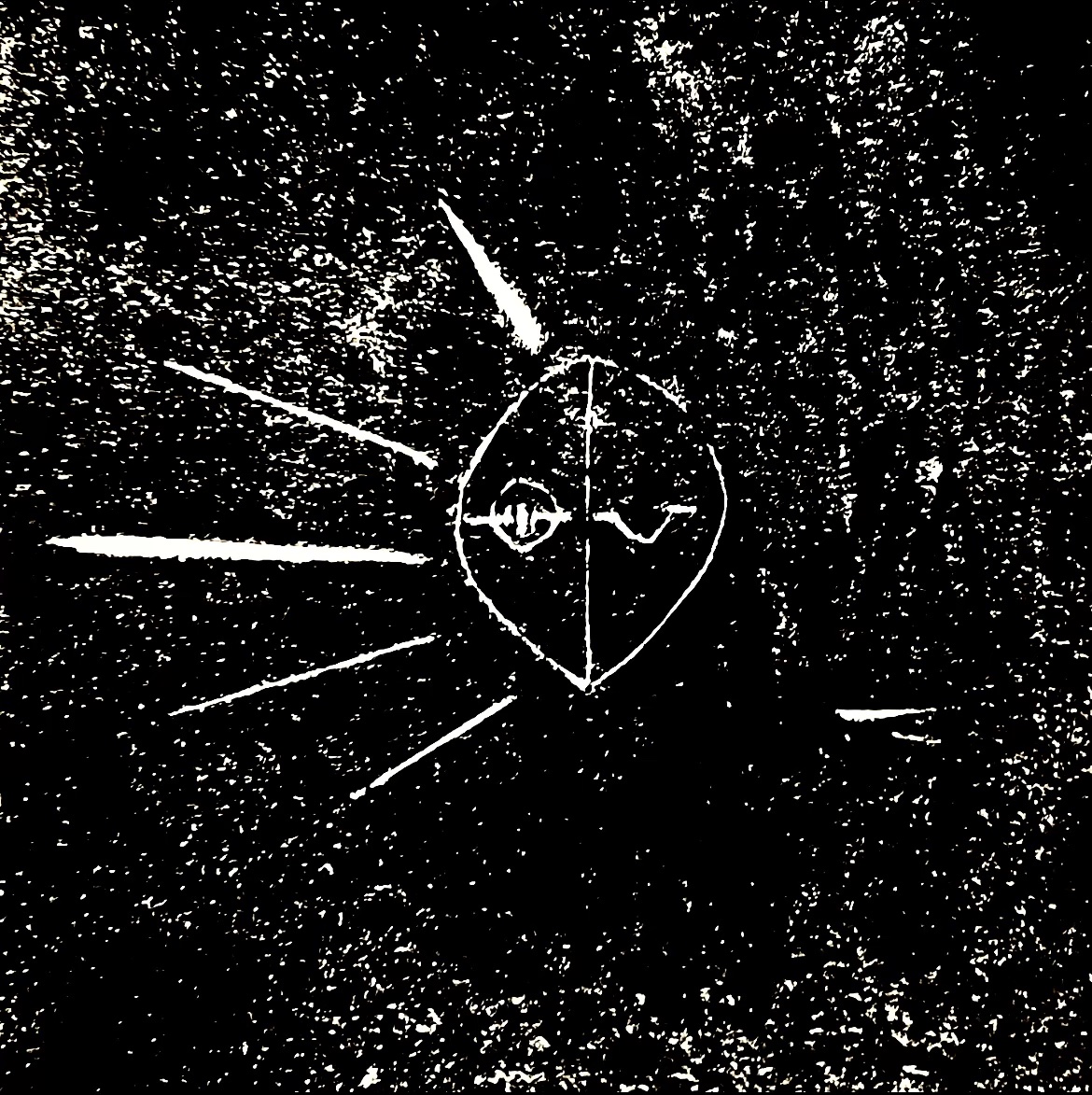
 The Library of Zosimos
Leave a comment