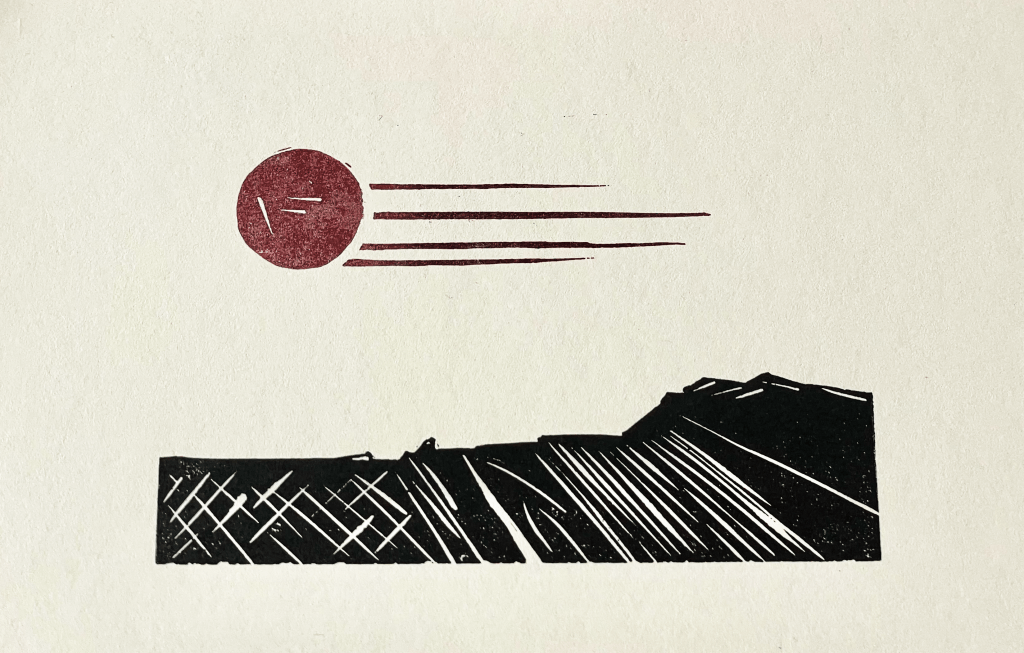

Imagining the shifting sands of the past and the long, winding comet-roads ahead
As we come into the final days of Retrograde’s Kickstarter campaign, I want to share with you a small vision for the future I’ve gained by studying and working with the transformative power of the physical, particularly with artifacts of physical creation from our past. From those artifacts and the new meanings they adopt in our present day, I see a pathway forward for building a future for my games, my work life, and my communities that looks more like the kind of life I want to lead.
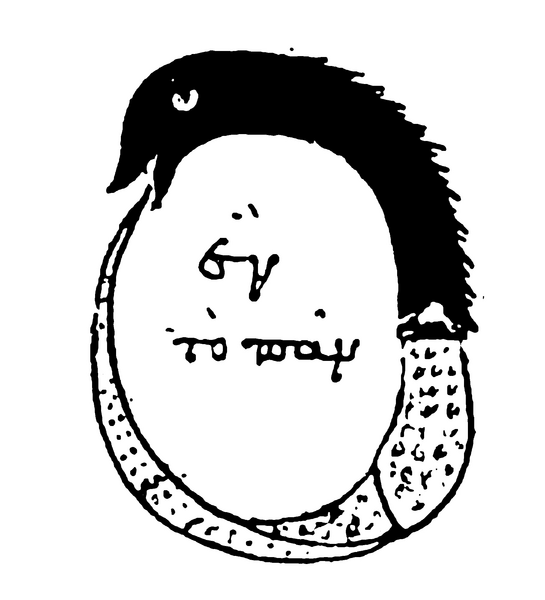
Around three years ago (only three? How strange these sands of cosmic time shift!) I came across Zosimos of Panopolis’ Cheirokmeta, the oldest surviving alchemical text. The title means “Things Made By Hand,” and I understood implicitly the power of using this phrase to describe alchemy: it was the human intercession that made the alchemist’s transmutations possible. It was within the ability of human hands to effect great change.
Cheirokmeta became a useful articulation for the transformation my playwriting undertook when it was translated from the page to the stage – hearing words read aloud changes their meaning, and the experimentation of a staged reading or workshop production provides critical information a playwright can use to improve their work. When all the pieces of a play click together, it’s pretty magical. It is the physicalization of those pieces – the animation of the text through the voices and bodies of the actors, the construction of the play’s world through its costumes, sets, lights, and sound – that makes that magic possible.
I felt an implicit connection between my words and the physical through these theatrical transformation, a connection that called for further exploration. Cheirokmeta inspired me to experiment with artistic mediums I never had before. It helped me believe that the power to create was something implicit in my hands, in all of our hands. Connecting that power to the alchemy and esoteric magic that had fascinated me from Borges and drove my own writing, I knew that a new means of physicalizing my written work would allow me to explore new creations awaiting me.
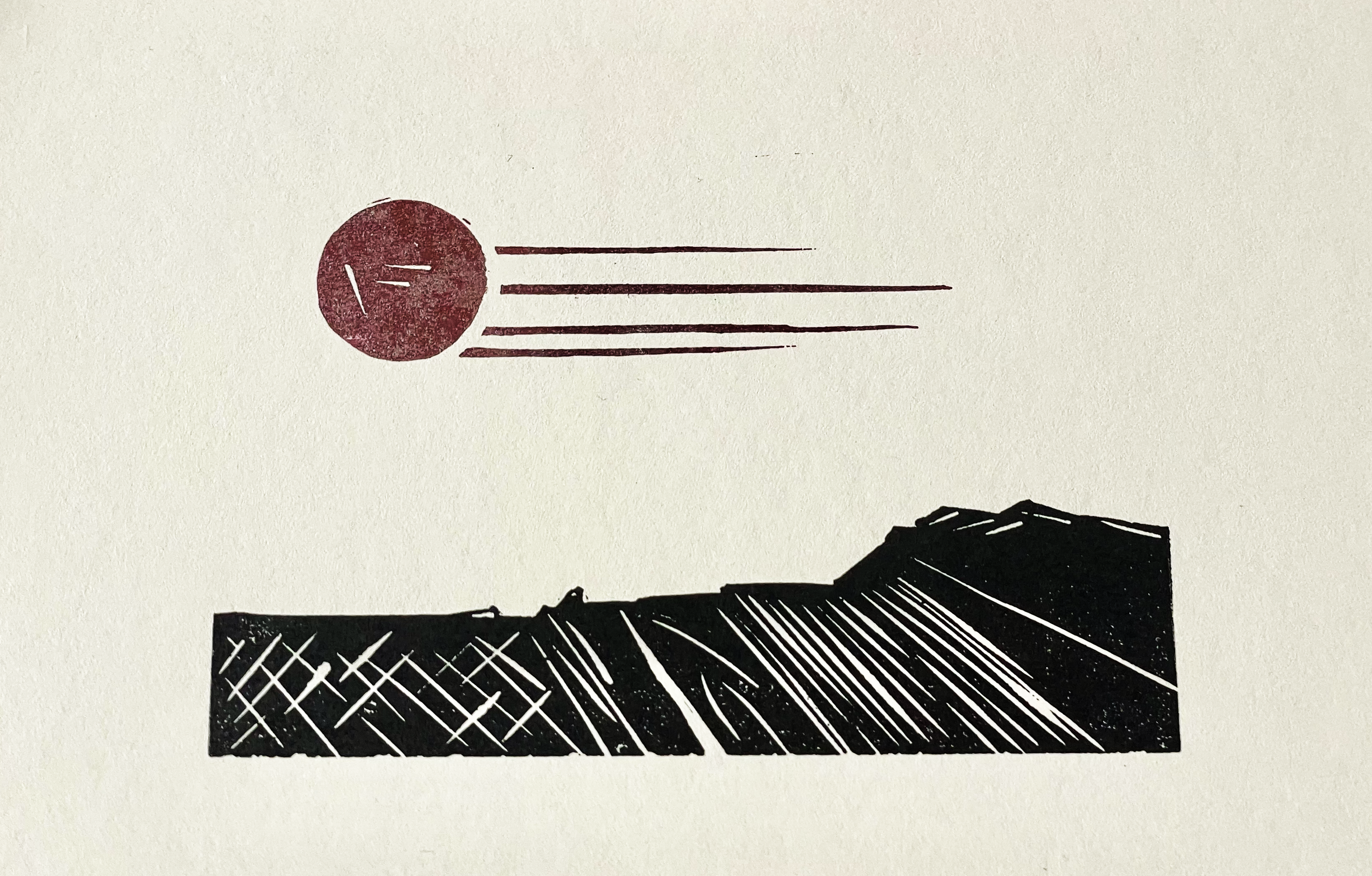
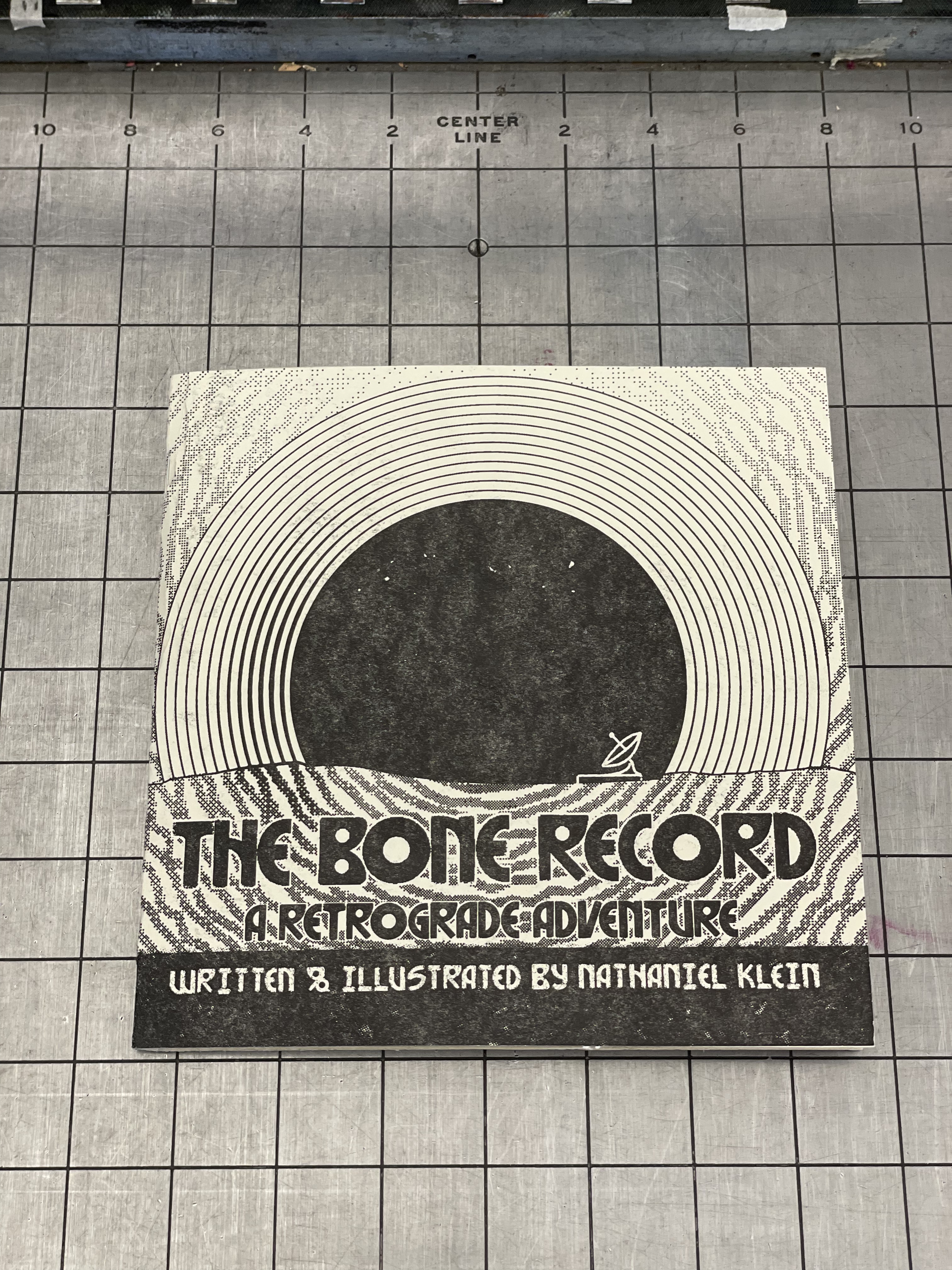
This set me on a journey exploring visual art, starting with printmaking. I carved my first lino block in the fall of ‘22, and I found a local letterpress class where I sought to physicalize my fiction, just as the stage had allowed me to physicalize my playwriting. Along that journey, I discovered Retrograde – I was fascinated by the titanic beasts of the letterpress machines, and indeed I felt the transformative alchemy that occurred when, with hand-set metal type and hand-carved linocut blocks, I transformed my writing into a physical artifact, imbued with meaning it did not possess when confined to a screen. I knew that letterpress could be the means for me to create something I never had before, and with the means of letterpress setting my mind racing with inspiration, the vision for Retrograde and its faster-than-light travel through occult printmaking coalesced.
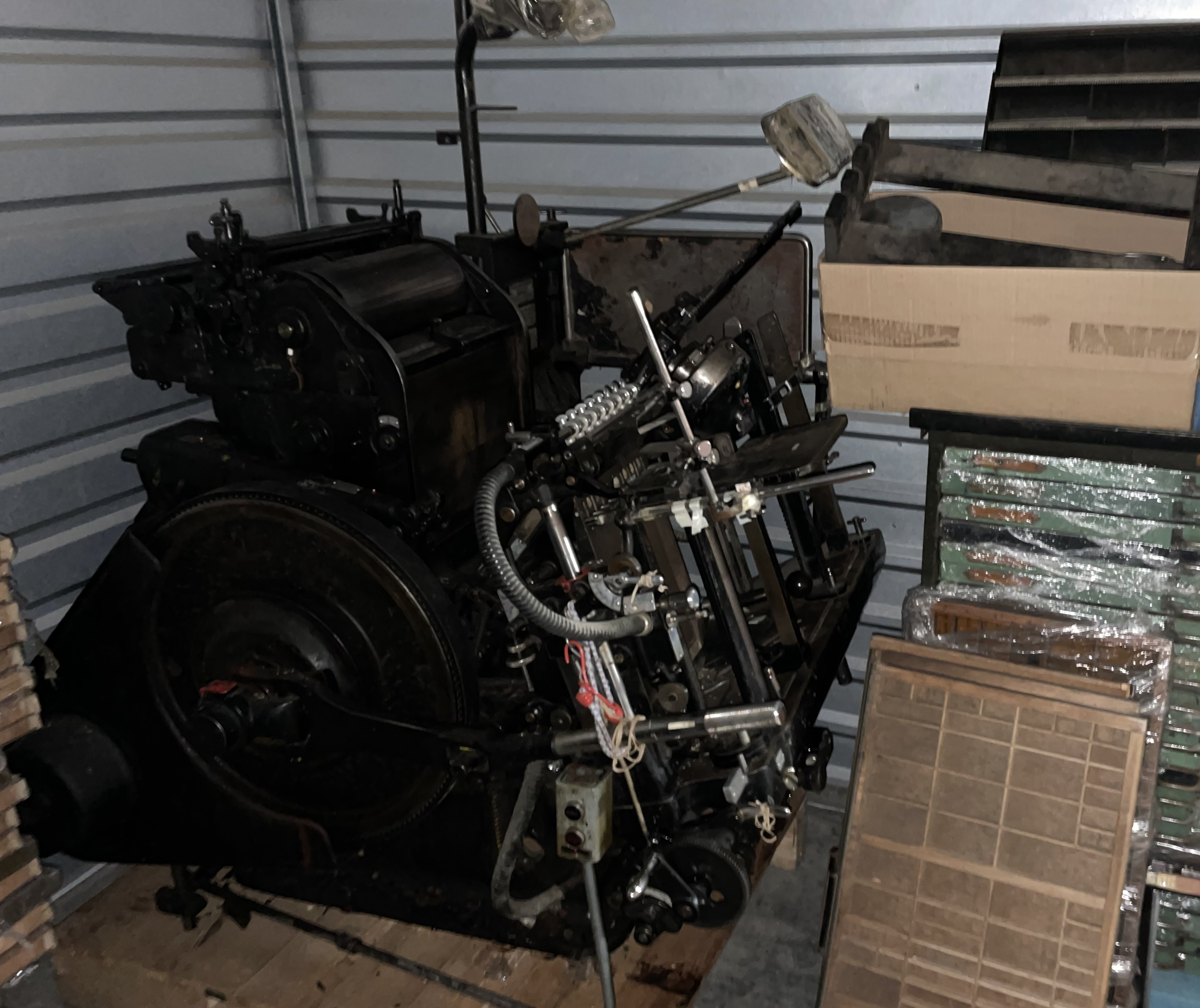
At the heart of Retrograde is the power of the handmade. Humanity finds that it is not technology that makes interstellar exploration possible, but the supernatural. With knowledge that, by rights, they should not possess, humans find that they are able to exert their will upon the cosmos and bridge distances that should be impossible to ford. Critically, it is analog relics from the past that make this possible – the occult power to explore the stars is mysteriously enabled through the use of printing presses, and humanity adapts this by then ancient technology to create a new future for itself.
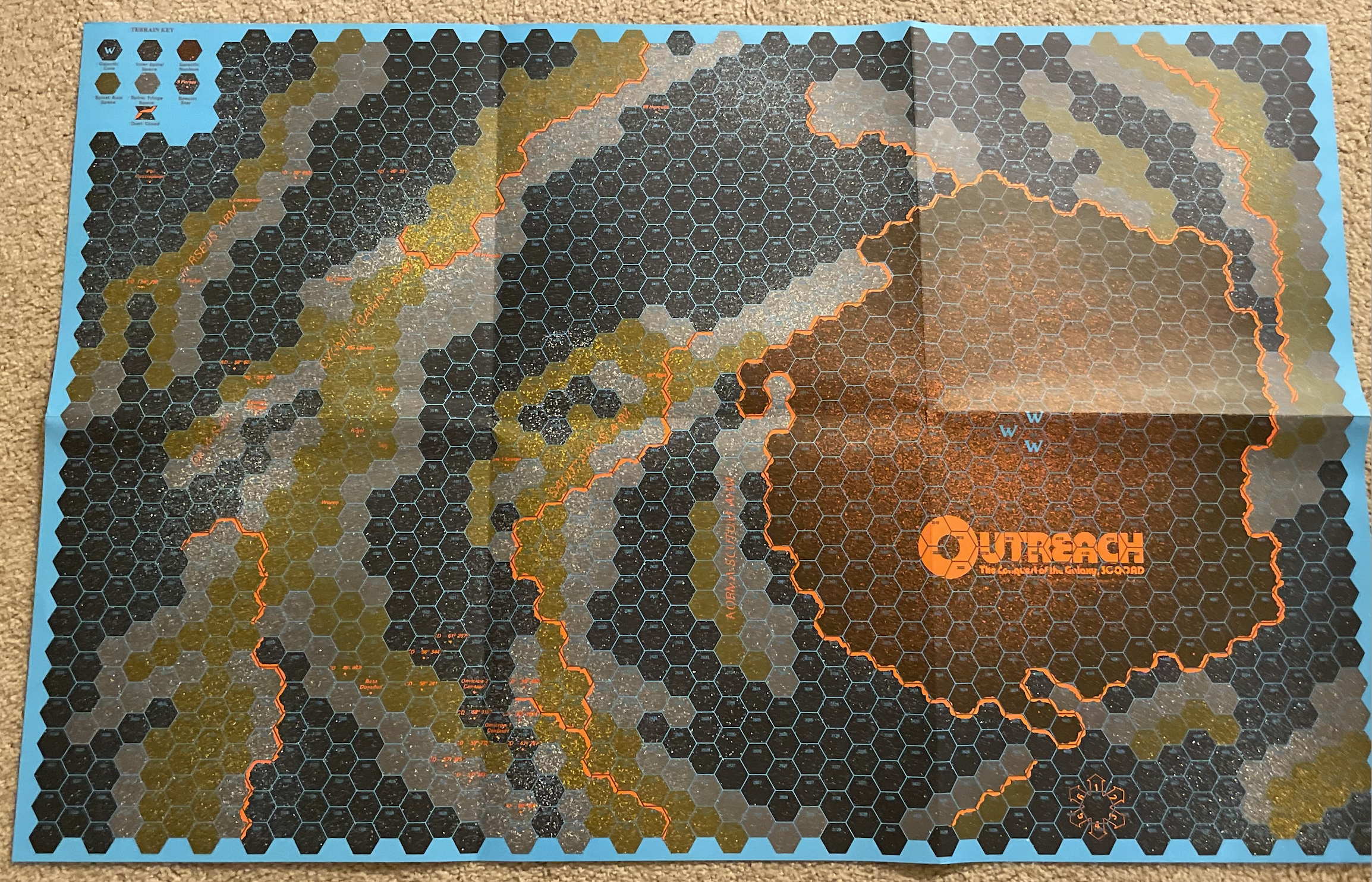
Moreover, because humanity is spread so far amongst the stars, such swift communication methods as the radio and the internet fail – in Retrograde, radio waves and fiber optics still must obey the speed of light. Instead, it is the Sanguitype Telepresses, the giant teleporting letterpress-starships, that allow distant outposts of humanity to remain connected, carrying newspapers, books, and magazines to distant stars, sharing the news and culture and change of other worlds. When the distances between ourselves grow so great as light-years, it is only the physical – artifacts we can pass along, preserve – that allows us to communicate, to tell the stories of ourselves and share the beauties of our lives with others.
I hope this is what Retrograde’s zines allow you to do. Whether it’s around a table in your home or across the digital seas of Discord, I hope the physical artifacts of Retrograde allow you to tell stories together. I’ve found new relationships and made lifelong friends around the table. I’ve kept in touch with friends living halfway across the country or across the ocean by playing games on Discord together. I’ve discovered intrinsic things about myself and others through the transformational storytelling of an RPG – transmuting the framework of an adventure into a world our characters inhabit. Above all, I hope Retrograde’s zines allow you to find community.
This is my vision for the future: the collaborative and interactive nature of tabletop role-playing games, combined with the artifactual, transformative power of print, can allow us to reclaim a human connection diluted by social media and algorithms and build communities focused on the human and human good. While AI increasingly threatens to homogenize media and make it more difficult for artists and writers to make a living practicing their craft, there is clearly an immense number of folks eager to tell personal stories and share the beauties and joys of creating. Look no further than Zine Month, and all the creators making beautiful human-made zines across Kickstarter, Backerkit, and all over the internet.
I anticipate a backlash against AI that drives more people to explore the physical crafts and weird, interactive stories that only humans can create. I think we’re already seeing the beginning of it. The fact that letterpress is reemerging as a craft is one small piece of the puzzle, but one that is particularly meaningful to me. We’re finding things that the tools of the past can accomplish that more recent tools cannot; there is a distinct tactile quality to letterpress print that captivates us that digital offset printing does not, and that physical quality inspires us. If it didn’t, letterpress would properly die out. Implicitly, we see a unique aesthetic power in yesterday’s methods of printmaking – part of that powers stems from the fact that you can easily imagine a human’s role in the process of the print’s creation.
The Old School Renaissance (OSR) is another connection to this; the aesthetics, the design principles, and the play styles of the experimental early forms of role-playing games from the 1970s continue to inspire folks today. The zine culture and physical aesthetic of early RPGs has persevered in an especially compelling way – indeed, I’m not familiar with any other form whose creators are experimenting with the combined powers of illustration, layout, and bookbinding with the same enthusiasm that RPG makers are. There’s an immense amount of creative energy buzzing around RPG zines, and I feel fortunate to have been ensnared by this energy and to be able to share my work with a community eager to explore all its facets.
When I began creating Retrograde, it was my hope to find a community who was invested in the same things I was, who saw the power of TTRPGs to bring people together and felt the power of creating a physical vessel for stories that were a key expression of the stories themselves. I am happy to report that I believe I’ve found it, at least the beginnings of it – the success of our Kickstarter is evidence enough, but I’ve had so many amazing conversations where I’ve been able to share my excitement for Retrograde and see what Retrograde means to others. In all of those conversations, I’ve been struck by the way that Retrograde implicitly makes sense to people. It’s weird, for sure – it’s one of the wackiest things I’ve ever created, and I co-wrote a play about Orson Welles doing battle with the ghost of Richard Nixon. Yet, it captures something that a lot of people are interested in. At least part of that is a desire to see a future that is more human-made, a future where we are connected not by algorithms and AI, but by sharing the joys of telling stories together.
This is all still a little abstract, but with your help, I’m hoping to make it more concrete. You’re here, which is a great start. After the Kickstarter, I’m planning on setting up a Discord where we can properly chat and play games and share all of the fun together, but I’m also eager to hear from you what kind of community you’d like to create and how you’d like to go about creating it. That’s a big question, I know, and I bet it’ll take a lot of experimenting together to find what works and what doesn’t, but I am open to all of the twists and turns that journey takes us on. I want to build something beautiful with you.
Thank you for taking this journey with me – I’d love to share this story and the stories we’re creating for Retrograde far and wide, and I’d love to hear what Retrograde means to you. We’ve got another 2 days (46 hours at this point, I think!) left of the Kickstarter, and the support you’ve provided means so very much to me – you’re allowing something that wouldn’t exist any other way to get out into the world. You can help us make a last big push and pave the way for more projects to come by backing if you have the means and sharing Retrograde far and wide.
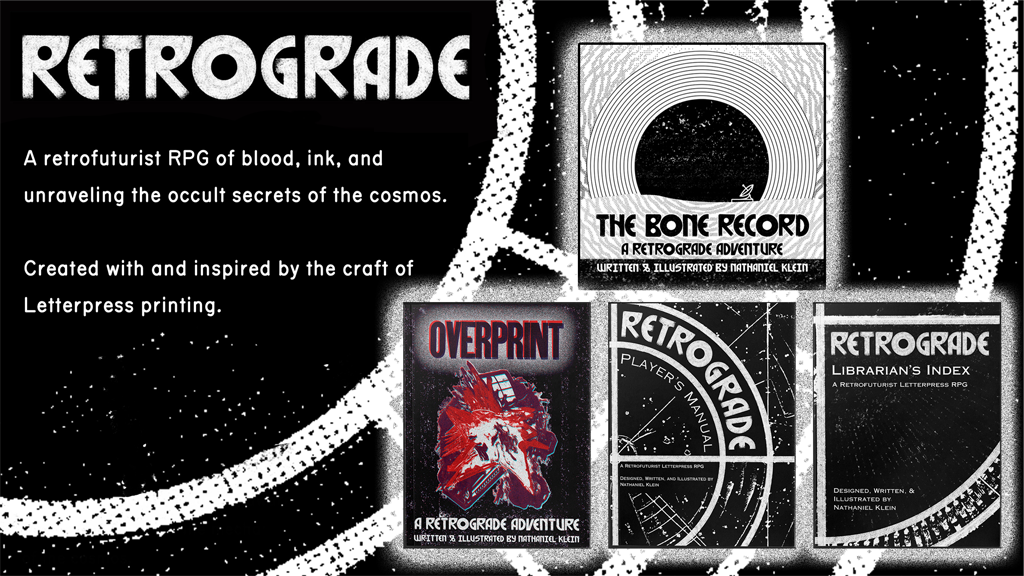
In my fiction writing within the narrative universe of Retrograde, there is a prescient ritual a human can perform called The Chrysopoeia, borrowed from a term used to describe the transmutation of lead into gold in alchemy. The Chrysopoeia allows one to see the past and entire causal possibility of futures of another entity – it’s a critical means the characters of my first novel, Pinkos, use to battle an eldritch entity. Today, I am reflecting on my past and the causal possibilities of the future before me. Though I can’t see what’s ahead in the ways that the Chrysopoeia allows, I still find reasons for optimism – a great sea of uncertainty and danger of all kinds lies before us, but I have a real hope that community and creating things together will help us weather the storms ahead. It’s not that I believe Retrograde is going to change the world or anything, but I do think a community has the power to change the lives of the people within it, and I hope to create one that does together with you.
Thanks for reading and coming along on this big crazy journey with us!
– Nathaniel
 The Library of Zosimos
Leave a comment