
Lessons from learning how to write TTRPG adventures
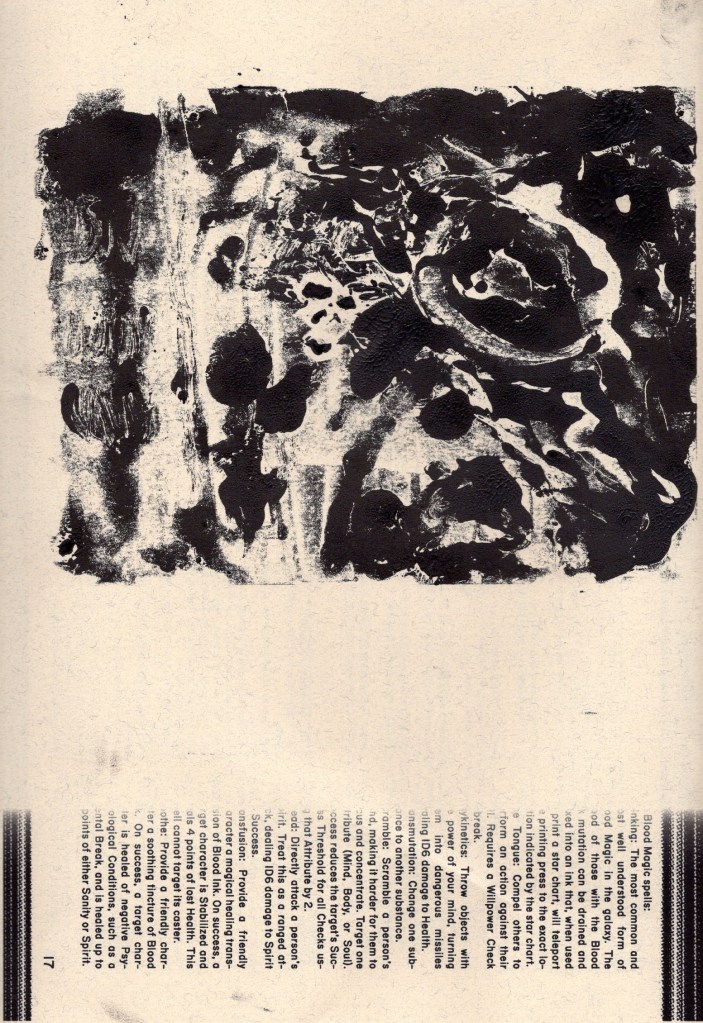
When I sat down to write Overprint, my first proper TTRPG adventure, I was surprised by how long the writing process was taking me – I slowly churned through clues and locations over and over, and I had a hard time wrapping my head around what to include and what not to include. It was an entirely different kind of writing than I had done before, and although the story was clear in my head, translating it to the page proved unexpectedly difficult.
In retrospect, I don’t know why this was so surprising. When I first started writing fiction after writing plays for years, I was vexed by the demands of a different form. Did I have to describe everything that happened, every physical detail of every person, place, and thing? What parts of the storytelling were up the reader to interpret in the same way that a play leaves much to the playmakers and audience to interpret? I had similar questions as I began writing TTRPGs, and while a bit of practice has allowed me to get more acquainted with the form, I’m constantly adjusting my techniques and experimenting with new ways of conveying information.
Learning a new form of anything is a challenge, but a rewarding one, and starting off with a few simple ideas in mind helped me ease the growing pains and create the kinds of stories I wanted to create in the way I wanted to create them.
Starting Where You Are
A basic principle I adopted was Starting Where I Was1 – all that really meant was accepting that I was a beginner, and looking for influences from the games I liked to play while accepting that my own writing probably wouldn’t feel like that after at least a bit of practice and a few rounds of revisions. This also translated into an overall approaching to presenting my adventures: I wanted to write Overprint to be both beginner-friendly and narratively deep.
I was a relatively new GM when I decided I wanted to create my own TTRPG ruleset and write my own adventures. As a result, my first draft of Overprint was written with a plethora of GM aids and tips about how the game’s narrative might be directed, the kind of tips I wish I had when I was running adventures. I’ve winnowed down some of those tips in the current version so as to not get in the way of the GM and the players telling the story in the way they want to tell it, but the beginner-friendly intention is still there. It’s my hope those tips don’t get in the way of more experienced GMs running Overprint in the way they want to, but accepting they might not was another important lesson from my first TTRPG writing experiments: I had to find the style of game writing I wanted to do, and run with it.
Finding Your Style
Nothing you write will appeal to everyone. That can be a hard thing to come to grips with, especially when receiving feedback, but that fact is actually an expression of the beautiful vibrancy of TTRPGs: people are writing games in a wide variety of written styles for a wide variety of play styles.
Starting Where I Was with this idea helped me write my adventures to facilitate the play styles I was most interested in experiencing as a GM and a player. I accepted that the way I wrote Overprint might not appeal to everyone, but it was accomplishing what I wanted it to accomplish. I would also incorporate the written styles I developed from my fiction and playwriting work where I could, and I made use of some old advice I’d gotten from fiction workshops: I should write the kind of stories I’m most interested reading. Odds are that other folks enjoy reading the same stories I do, and, therefore, might like the stories I write, too.
In my fiction writing, I more or less found my written style by throwing the five or six kinds of books I liked to read in a big pot and seeing the weird ways they congealed and stuck together. This worked out surprisingly well for me – my novel, Pinkos, is a spy novel about a Soviet agent who discovers a supernatural conspiracy in the Nixon white house and winds up discovering he’s the reincarnation of an ancient alchemist in the process. It’s Borgesian, it’s theatrical, it’s full of The Twilight Zone and The Manchurian Candidate and Fear and Loathing in Las Vegas. It was the weirdest thing I made before Retrograde, but I do believe I’ve outdone myself with Retrograde’s printing press–starships (for what it’s worth, Pinkos and Retrograde take place in the same narrative universe!)

I think this strategy of stylistic blending works great for constructing compelling narratives – Overprint borrows a lot of inspiration from Blade Runner, hermetic alchemy, and cosmic horror among other things – but it’s been more difficult when it comes to precisely and consistently communicating information in the way that TTRPGs need to. Games like Dialect have an extremely different mechanical structure and verbal style than games like Mörk Borg or Mothership, and the verbal and visual styles of their rulebooks are so distinct as to make any combinations thereof less than straightforward.
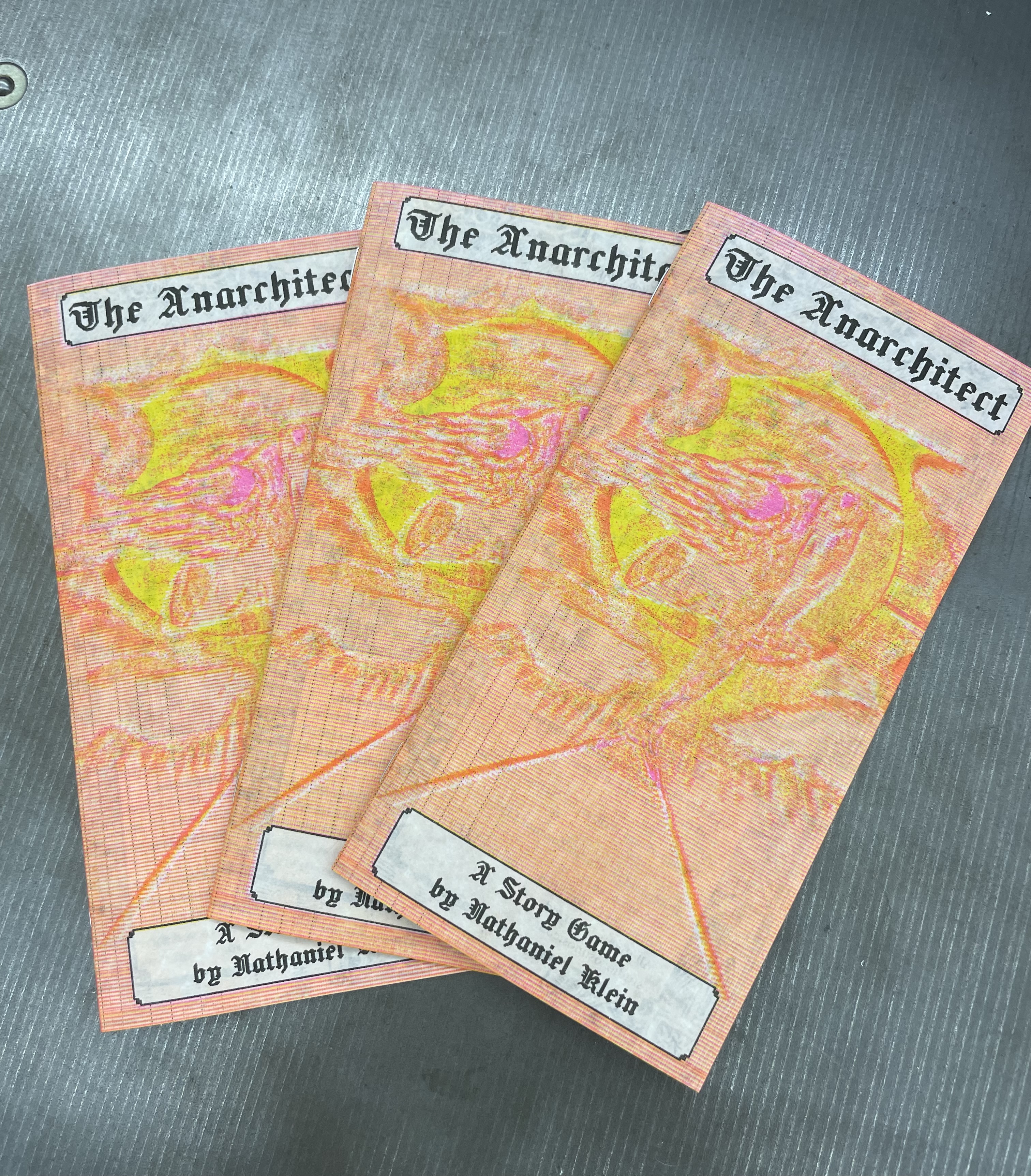
While I’ve taken inspiration from a wide variety of TTRPGs, it’s clear to me that trying to combine all of the different TTRPG written styles I’m interested in would fail to facilitate the style of play I was aiming for. Instead, I’ve started thinking about how I can facilitate different experiences in different games: Overprint is a fairly conventional investigative scenario, with objects, puzzles, clues, and social interactions set up in specific locations that all trigger specific Skill Checks if investigated, while my game The Anarchitect is much more free form and driven by players envisioning small scenes together spurred by the game’s written prompts. If you want to see what those look like in action, you can check out my games on itch.io (Overprint will be there soon!)
The Challenge Ahead
For better or worse, the actual writing of an adventure is just the tip of the iceberg. TTRPGs convey lots of information visually, and while maps, illustrations, and layout all add compelling depth and aesthetic power to your writing, they must be used carefully to compliment and elevate your writing. Layout has probably been the most difficult part of learning how to create TTRPGs – it’s thinking about communicating information in a way you very rarely consider in fiction or playwriting unless you’re really playing around with form. I’m still putting the finishing touches on Overprint’s visual and physical presentation, but it’s been an incredibly rewarding challenge, and I’m discovering new things about storytelling as I craft stories in new forms.

I’m eager to get this blog up and running again, exploring my ideas and creative processes as a writer, game designer, and printmaker. If you’re curious to see how my work is coming together and what’s next on the horizon for me, subscribe right here and pay me a visit on Bluesky, Instagram, and itch.io too – I’ve got a lot of stuff cooking up right now, and I’m super eager to share it with y’all.Thanks for reading!
–Nathaniel
I got the idea of Starting Where You Are from Bill Burnett and Dave Evans’ Designing Your Life.


Leave a Reply