
Investigating what makes an Occult RPG
Just like the stories and settings at play in my games, my game’s play styles come from experiences with other RPGs that have left an impression on me: my designs are a big pot I throw all my inspirations into, and the style/genre/kind of play my games are focused on are a result of play experiences that have left an impression on me.
That means nearly all of my games emphasize an investigative or mystery-solving aspect: Overprint is all about unraveling a corporate conspiracy, and in The Bone Record figuring out what, actually, is going on is key to building tension and the initially unknown nature of the horror lays the foundation for growing suspense.

This is true of Ephemeris too: while the invitation to the remote manor and the player characters’ strange, reclusive hosts immediately conjures Dracula, it’s only one small part of the mysteries at play: the main NPCs have complex, human motives that aren’t immediately obvious, the Blood Comet is actually a sentient demonic entity, and there’s a lich slumbering in the catacombs whose undeath is tied intrinsically to the Blood Comet’s power and Baroness de la Bré’s plan to pact with the comet to save her daughter.
This is more than just mystery solving or horror – you don’t actually solve the problem by “solving” the mystery, and while it’s certainly horrific, the emphasis is less on defeating the horror and more on deciding what to do about it. The best way I’ve found to describe Ephemeris’ specific blend of horror and mystery-solving is Occult. Occult in this case is not just about the vibes or the subject of the game – I think Occult is a useful way to describe the style of play experience I’m hoping to facilitate with Ephemeris.

Struggling With Categories
I’ve recently struggled to categorize my games because it feels like some common categories of RPGs are too amorphous to accurately describe what my games specifically do. OSR feels apt for my games, as Retrograde and Ephemeris both emphasize creative problem-solving, a light ruleset, and thinking of possibilities beyond the rulebook or the character sheet, but from my experience it seems that calling my games “OSR” creates a certain expectation for many players that my games don’t necessarily line up with. I was surprised when a local gamemaster politely declined to try out Ephemeris because they were more interested in games that focused on narrative play and role-playing – two huge aspects of everything I design and everything core to my interest in RPGs as a creative form.
I think part of this disconnect is that genre begins as a category imposed upon works that are perceived to share something in common. While one can certainly create a work to intentionally fit within a genre, such as one might write a mystery novel exactly because mystery is a recognizable and marketable genre of writing, this isn’t always front of mind when I design my games; Ephemeris utilizes elements of investigative games because I like the play experiences those games facilitate, but Ephemeris is not just about investigating a mystery. I’m not aware of any category that fully encapsulates the tone and style of play I’m hoping to create with Ephemeris, so I’ve tried to define my own: Ephemeris is an Occult RPG.
Unraveling The Occult RPG
My basic thesis for the Occult RPG is the combination of horror and investigative elements that ultimately involves a revelation, the reveal of a secret that changes the way both the players and their characters understand the experiences they’ve had in the course of discovering it.
Horror is absolutely an element of the Occult RPG, as is mystery-solving. I think most horror game probably have some element of discovery, but Occult RPGs emphasize these discoveries not merely as gaining knowledge but as transformative experiences. In a straight-up horror RPG, discovering the nature of a foe might give you the information you need to defeat it. In an Occult RPG, the act of discovering the nature of your foe is, in and of itself, a transformative event that will change your character’s understanding of their world. What do these transformative events look like?
Braving Different Kinds of Danger
One defining aspect of Ephemeris is the multitude of dangers players face: their bodies can be destroyed by the Blood Ink Vampires’ vicious bites, their minds can be broken by discovering cosmic secrets impossible for mortal minds to comprehend, and their souls can dominated, manipulated, and bound by the power of malefic will.
This shares a lot with Cosmic Horror – confronting things you thought were once impossible can certainly just break your brain in a Lovecraftian sense, but it’s a little more complicated in Ephemeris because most people within the game’s universe are aware, at least in an abstract sense, of the reality of the supernatural.
People in the world of Ephemeris travel faster than light by performing an occult ritual involving printing star charts with blood used as ink on star ship-sized printing presses – “magic” is understood to be a functional part of reality.
In this context, mind-bending secrets are not dangerous because they are otherwise presumed to be impossible. Rather, discovering such secrets inevitably leads one to deeper and deeper revelations – continuing down such a path means understanding the cosmos at a level beyond – or, perhaps, less than – what a human being is capable of, making them unrecognizable to their former selves.
Taking damage is not simply mechanically losing hit points; such damage changes the character, and can result in permanent scars, either mental, physical, or spiritual. This idea of change is a fundamental aspect of the Occult, and a defining feature of Ephemeris.
Delving into the Magical and Mystical
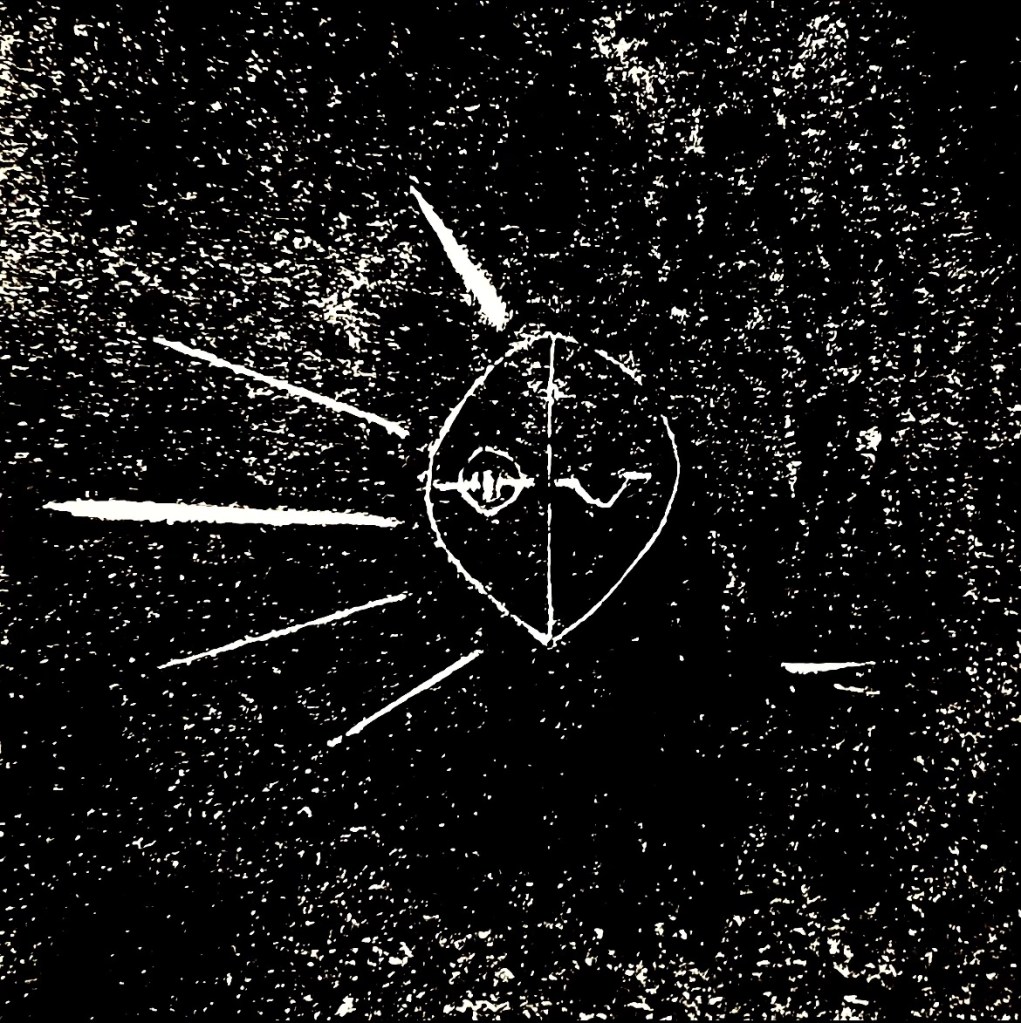
The kind of transformative change that Occult RPGs entail inevitably involves encounters with the magical, mystical, arcane, supernatural, surreal, or otherwise “unreal.” It’s about what happens when you discover something that doesn’t fit with your previous understanding of the world. Those encounters will fundamentally leave you changed, and the knowledge you gain may in turn allow you to change the universe in a way you previously could not imagine.
Encounters with the unreal in storytelling allow us to come to grips with reality in a way that is a little easier to take hold of. When we encounter ancient secrets, we discover new articulations of our present lives and circumstances. The unreal is not removed from reality; the unreal is a mirror that reveals parts of reality we otherwise could not see.
This is certainly emblematic of storytelling far beyond just Occult RPGs, but it’s a critical part of my games. Ephemeris is driven by a deeply human story: a mother’s quest to save her daughter from a hereditary illness. That story takes place in the context of a world driven by the supernatural and the mechanisms of that quest are occult in character, but ultimately it is a timeless story of people trying to change their fate against seemingly impossible obstacles. I do believe that Occult RPGs can particularly emphasize this personal element; there is an emphasis on the character’s experiences and decisions, how they change, and what their encounters with the unknown change what they are capable of.
The Transformative Unknown
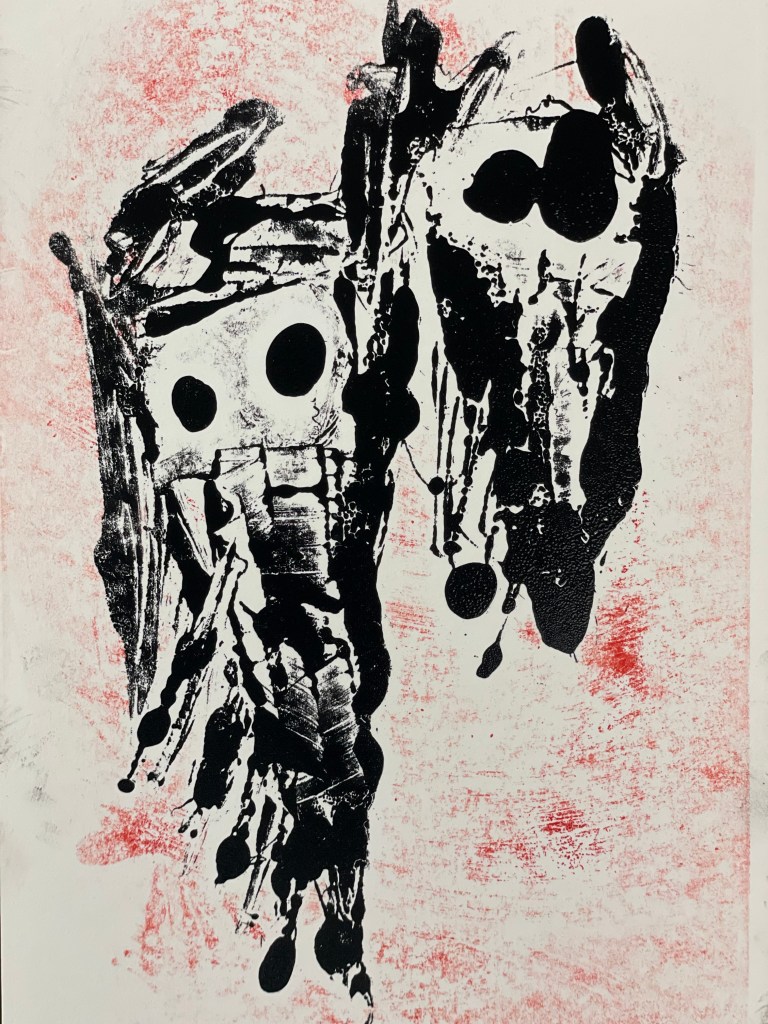
Ultimately, the idea of the Occult RPG is really just me trying to communicate what Ephemeris is and how it is distinct; the actual reality of reading and playing Ephemeris is more significant than any attempt to categorize it. But I do think that Ephemeris is more than just an “investigative” or “horror” game. Ephemeris is what happens when you encounter things that fundamentally contradict reality, what happens when you come up against the transformative unknown. That unknown is negotiated by investigation, experimentation, and discovery, and ultimately one’s characters emerge from those experiences fundamentally, radically altered. I’ve really enjoyed what those discoveries look like around my tables, and I think it’s the beginning of a framework for RPG experiences I’m eager to continue exploring.
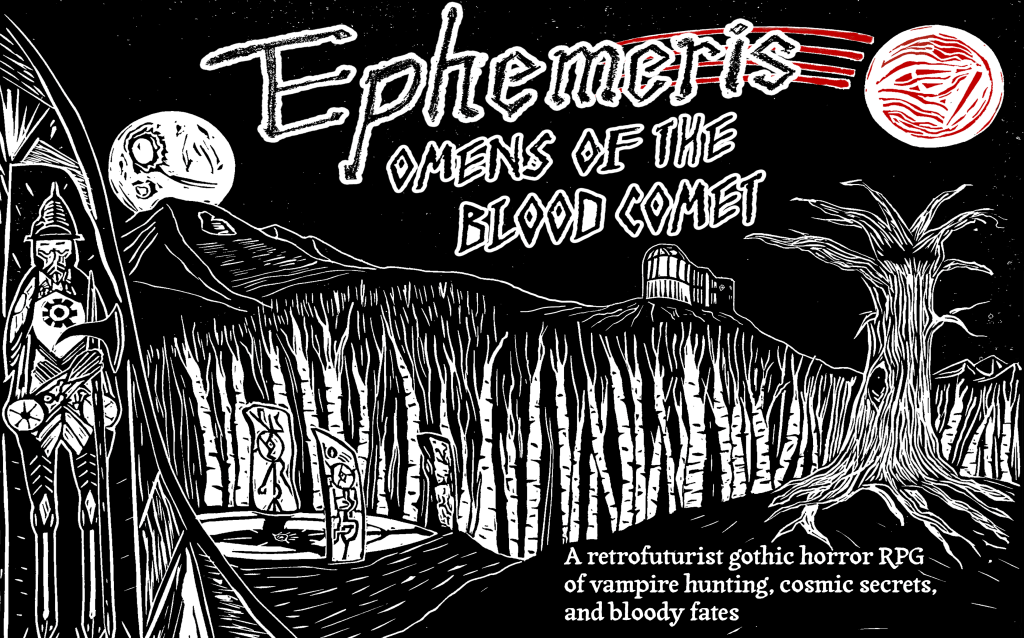
What do you think? Is this framework distinct enough for the Occult RPG to function as a meaningful category, or am I really just defining a subgenre of horror? Let me know what you think – if you’re curious to see what my style of Occult RPG looks like in practice, you can play The Eve of Bloody Stars right now for free and grab your copy of Ephemeris on Kickstarter.
Thanks for reading!
– Zosimos


Leave a Reply