
How risograph adds a magical, physical dimension to my illustrations
In college, my creative writing professor once gave a lesson on using your strengths as an artist to mask your weaknesses. To be sure, no one is a perfect generalist, but my real takeaway was that we naturally become more adept at the elements of craft we’re most interested in. We’ll get more practice using those elements we enjoy using the most, and they’re the parts of your work that are most likely to shine. Our passions become our strengths.
With writing, my favorite parts are language and dialogue. With visual art, it’s texture. I love texture. It’s a big part of the reason I lean so hard into printmaking; paper and ink allow for so much textural play. Monoprints are all texture. Letterpress and linocut adds a physical, tactile texture to your prints. Risograph offers a mercurial, vibrant transformation that offers a piece an entirely new dimension of texture.
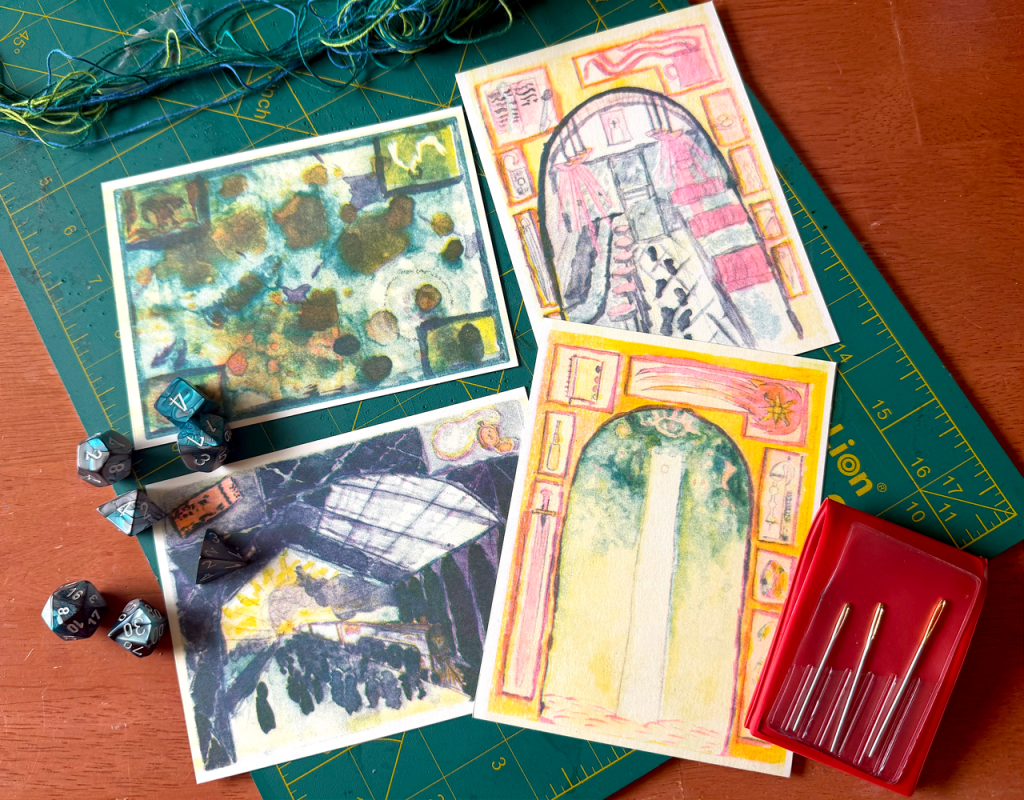
I’ve written about how my work feels like alchemy, how illustrating and physicalizing text changes its meaning and power. The form of our storytelling is no less important than the contents of the stories we tell. These transmutations feel especially visible with risograph, and last week I had a great chance to observe the textural alchemy of risograph at play.
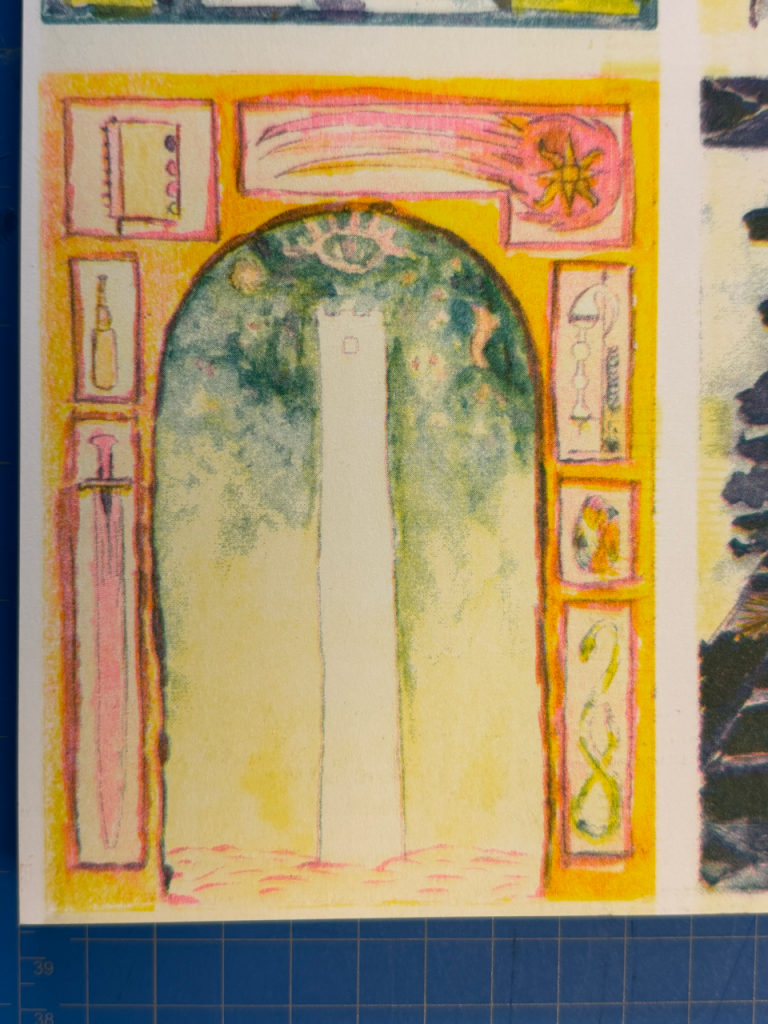
I’ve been painting watercolor illustrations for my upcoming game project, The Prismatic Oracle, rendering scenes of mystical landscapes and artifacts. I then printed postcard versions of the illustrations with risograph, and I absolutely loved the result. I’m still learning my way around watercolors, but I’m already finding great textures to play with: the way wet on wet blends into gradients and the way wet on dry pools and saturates are lovely, and every brushstroke feels like a new, unstable experiment. Then, the real revelation comes: the way those textures get transmogrified with risograph is incredible.
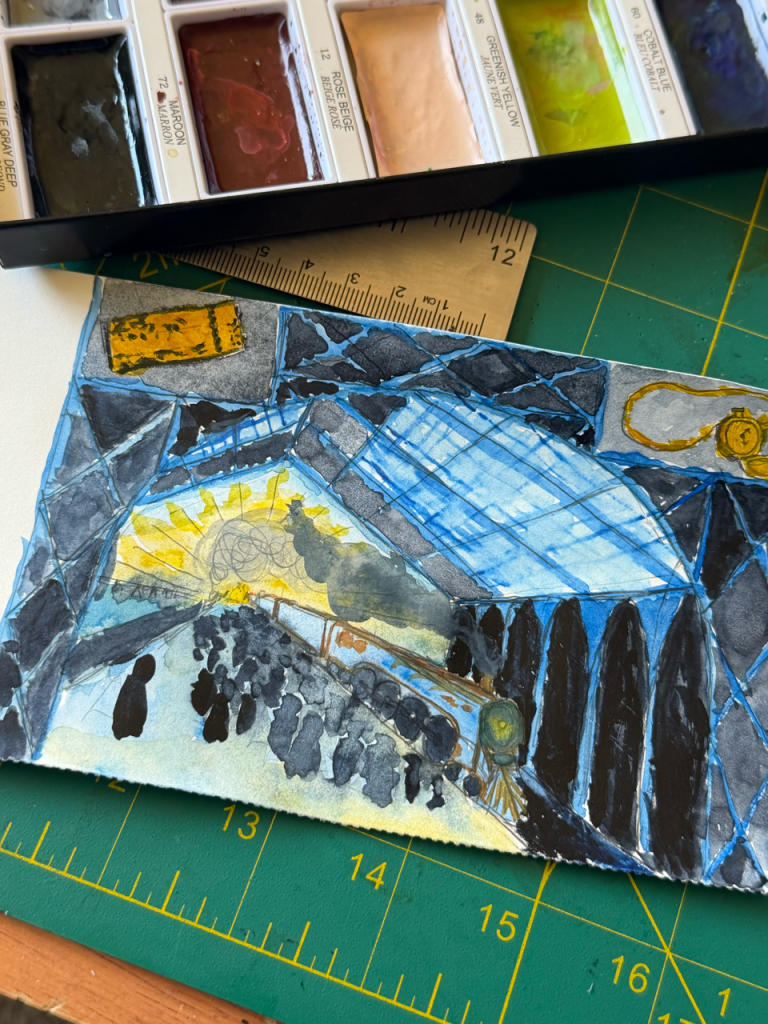
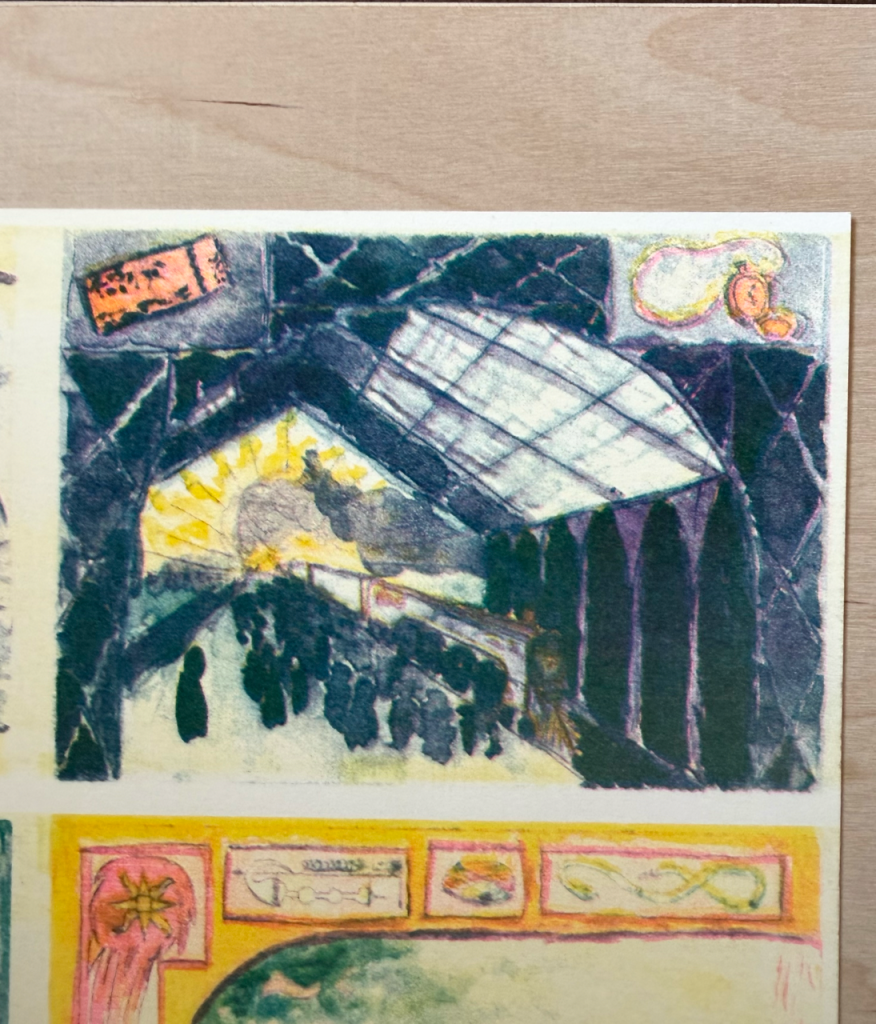
I’ve heard many other printmakers say that risograph’s inherent imperfection is a large part of its charm. I certainly do find its unpredictably and organic textures charming, and it’s a beautiful truth that every risograph print is noticeably distinct from any other, but it bears noting how this imperfection comes about: multicolor riso prints are made by breaking down the image by each color and then putting those single-color images back together again.
It is from this deconstruction and reconstruction that riso prints are born. Spectrolite is an amazing program I use to decide what colors I want to image with and separate my piece into different color layers. But it’s finicky nonetheless. Every riso job is a new experiment, and it takes a good deal of troubleshooting to balance the contrast, get the registration as lined up as possible (never perfect, mind you), and get the paper fed through without complaint. Riso prints up to 150 pages a minute, but it took me about two hours to get the plates scanned and the masters made.
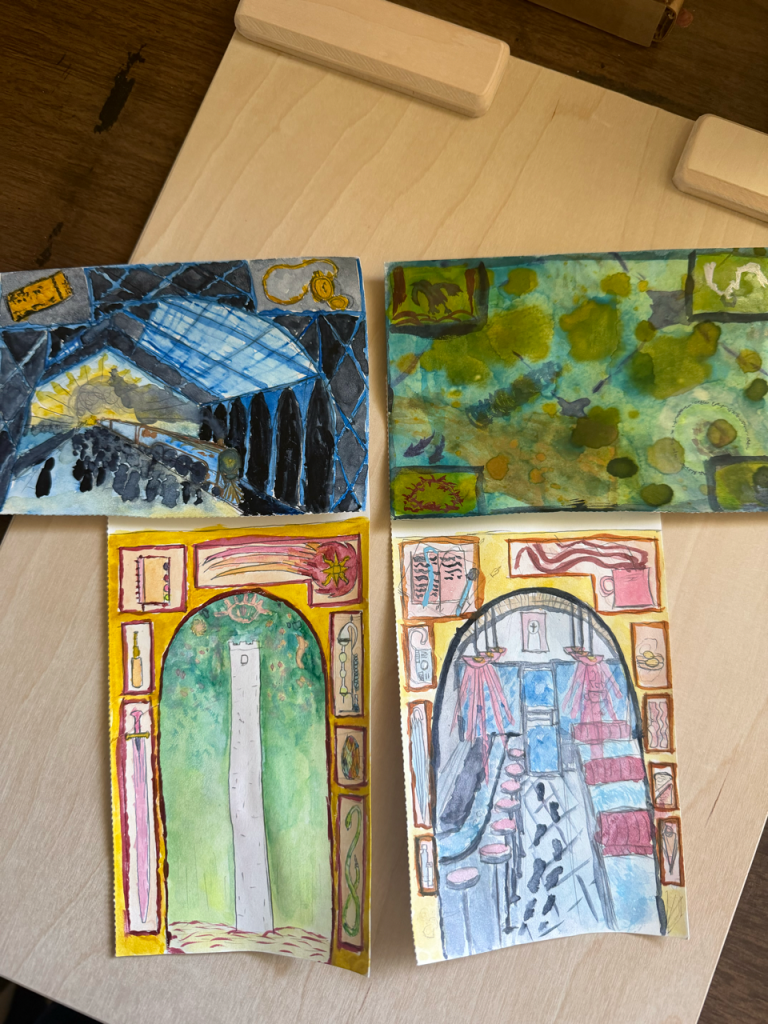
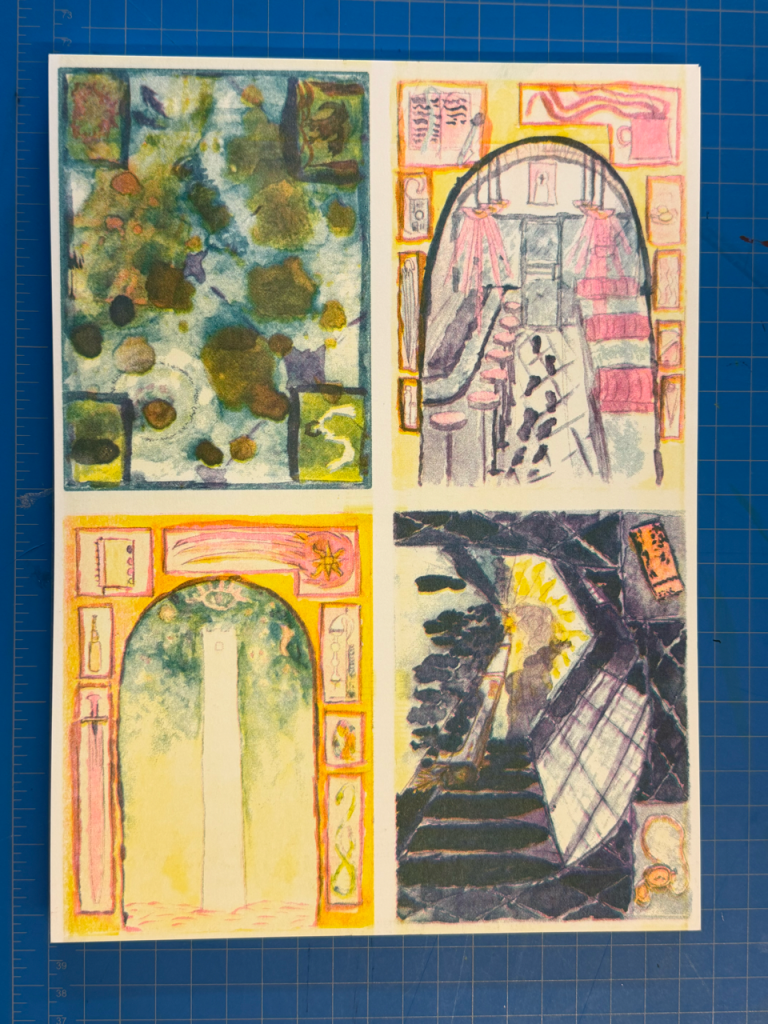
There’s absolutely something from the watercolor renderings that gets lost when they’re processed with risograph. The riso dot process makes everything soft and fuzzy, and some of the finer textural quirks and details in the watercolors get dissolved into noise. But the end result has a new life the original watercolors lacked: it is multiplied, transmogrified, and its new textures give it a new story.
Not only is the riso texture visually interesting, it works to unify the set; in the new, dreamlike haze, one can more easily imagine happening upon these four vistas together. Different as they are, their shared reconstructions help them belong together.
Deconstruction and reconstruction is how I create everything I create. In fact, it’s how everyone creates. We draw inspiration from everything that comes before our present moment, countless stories and histories and great works that have caught our eyes and our imaginations, ponderous hours of practice and happenstance that prime us for the time of creation, a time that can come upon us by the summoning of honed discipline or beautiful accidents of chance.
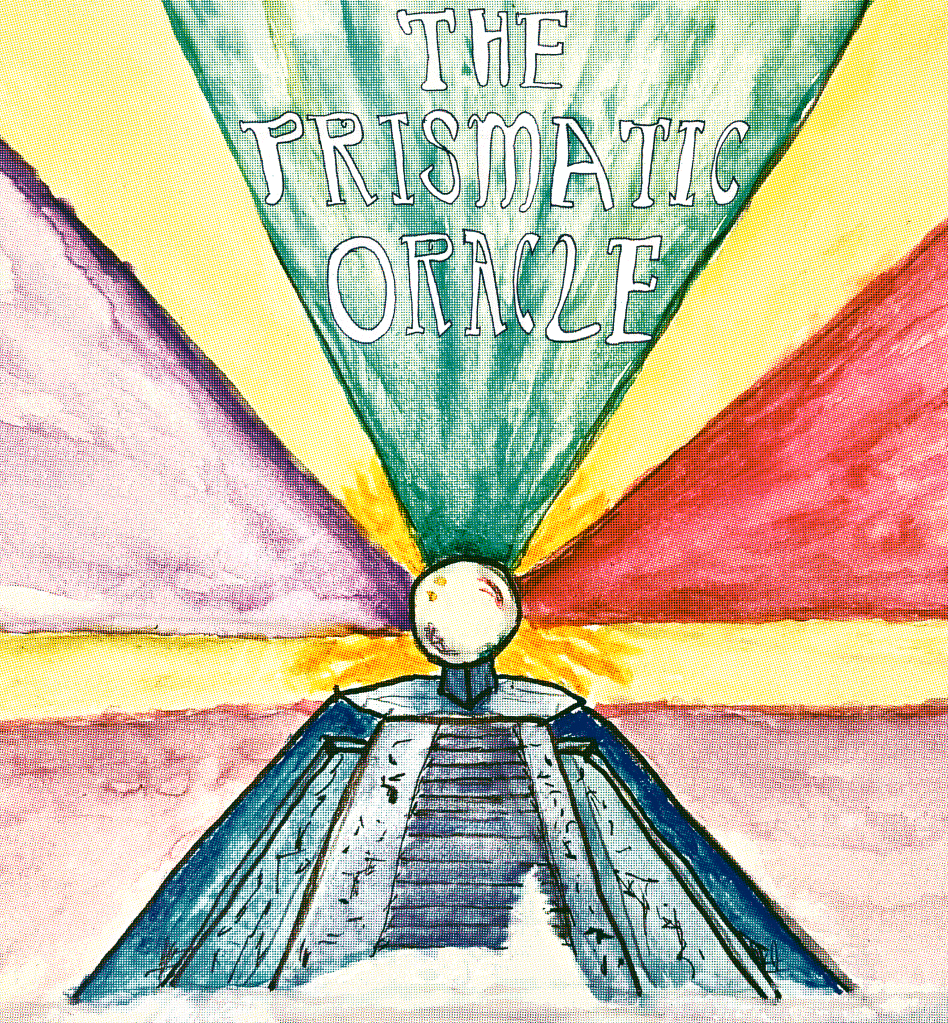
This is the alchemy of change: different wholes are broken down, their pieces modified in reactions of imagination and reapplication, and a new work is put back together again, a story whose pieces come from the uncountably many places human inspiration draws from. This is how The Prismatic Oracle came about: encounters with keepsake games like Shing Yin Khor’s A Mending and journaling games like Jack Harrison’s Koriko, stories I come back to again and again like Coelho’s The Alchemist and Borges’ Ficciones, and an urge from an unknown part of myself to combine my love of bookbinding and risograph and with my partner’s joyful junk journaling. A great creative reactions as all these elements are thrown together, boiled, reduced, distilled: Oracle is the result.
Risograph is this process in miniature. In the simplest physical sense, it comes down to the push of a few buttons. But when viewed with all the other processes and disciplines that inspired the piece and propelled its creation, the printing is the last reconsecration before the work is christened, a piece of textural beauty manifested as the story takes physical shape.
This is the magic of risograph: it caps off a beautiful, impossible process of alchemic change, and it turns what was once only idea and dream into something you can hold in your hands.


Leave a comment