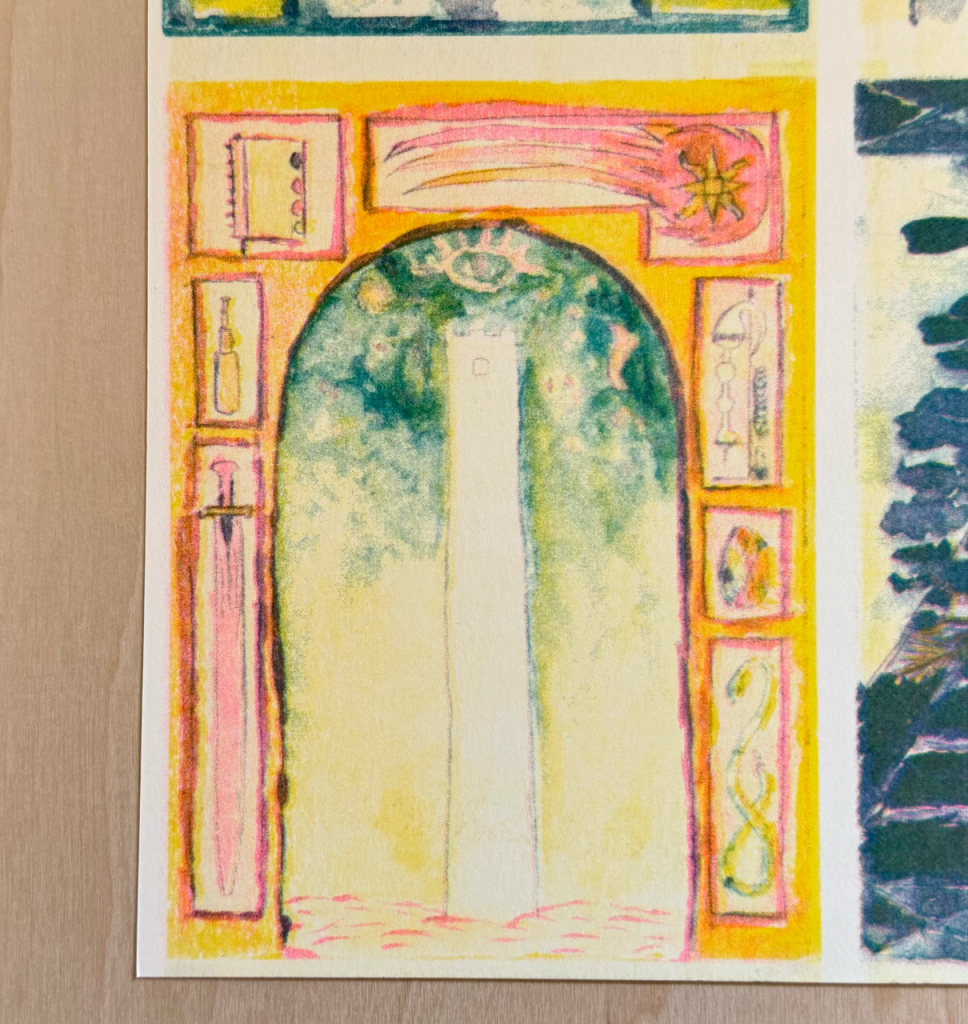

A peek at what’s in store for you in The Prismatic Oracle
The Prismatic Oracle is my current game design project: a keepsake game where players collaboratively collect found text, visuals, and objects and interpret them as omens of a prophecy, creating a junk journal that is also a prophetic text.
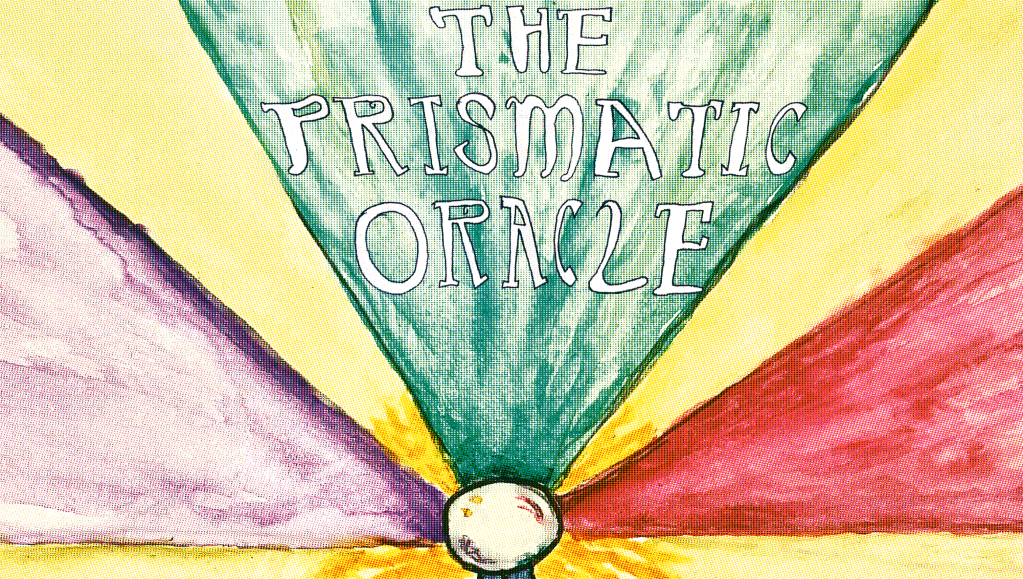
I’ve been inspired to create a game like this from RPGs like Dialect and A Perfect Rock that play with text and found objects and keepsake games like A Mending, as well as my partner’s junk journaling.
It’s quite different than my previous games, but is driven by the same intention that drove me to create Retrograde: I want to create the kind of game I’m interested in playing, and these days I’m finding myself increasingly interested in games that incorporate physical creative play, introduce me to new crafts and creative mediums, and serve as catalysts for further storytelling and adventuring.
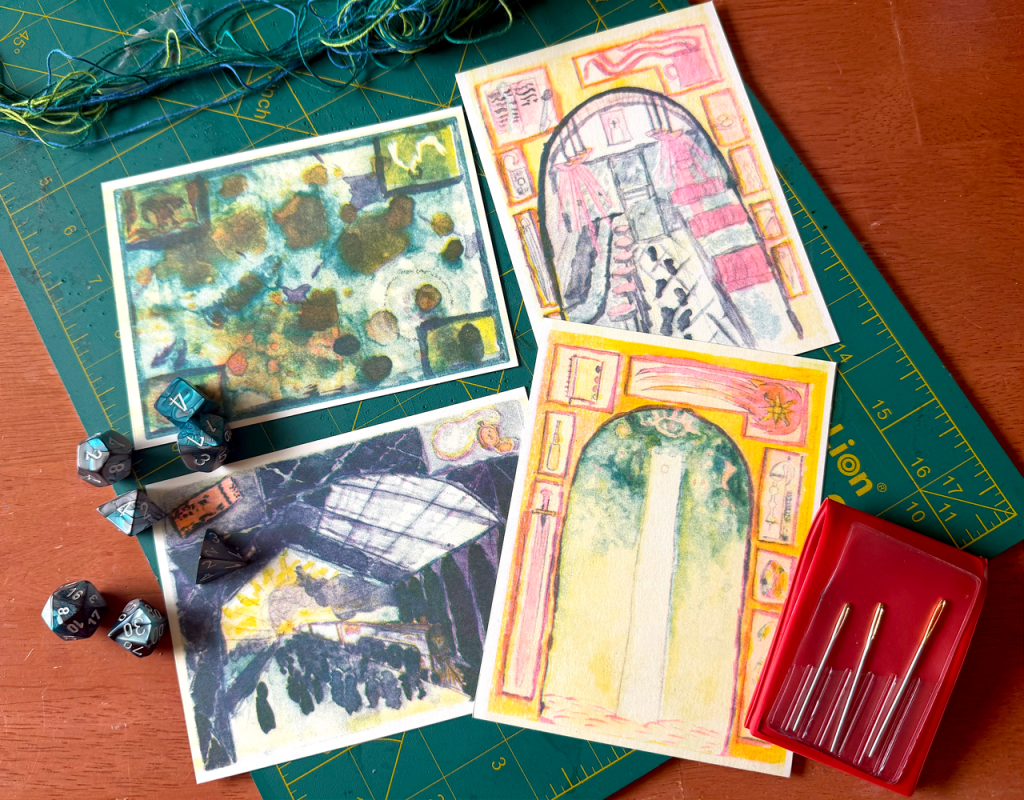
I’m in the home stretch of finishing the text of Oracle’s book, and in anticipation of our Kickstarter launch in a few weeks’ time, here’s a look at all the bits and pieces at play in the adventure awaiting you.
A Binding Journey
The Prismatic Oracle begins with the player’s pilgrims voyaging on a small skiff to the Temple of Prismos, the home of the Prismatic Oracle who is said to offer true visions of what was and what will be. Each pilgrim is driven to Prismos by a central question which has come to define themselves, a question they need to answer. This character creation is minimalist; the artifacts the players find will inform much of who their characters are and who they may become.
Once their characters arrive on Prismos, the players are prompted to craft a physical book they’ll use to catalog the secrets they discover and the artifacts they gather. It’s quite simple to bind a saddle-stitched booklet, and Oracle will walk you through it with diagrams and invite you to get creative with the materials – paper, thread, and embellishments are all opportunities for creative play.
Exploring The Temple
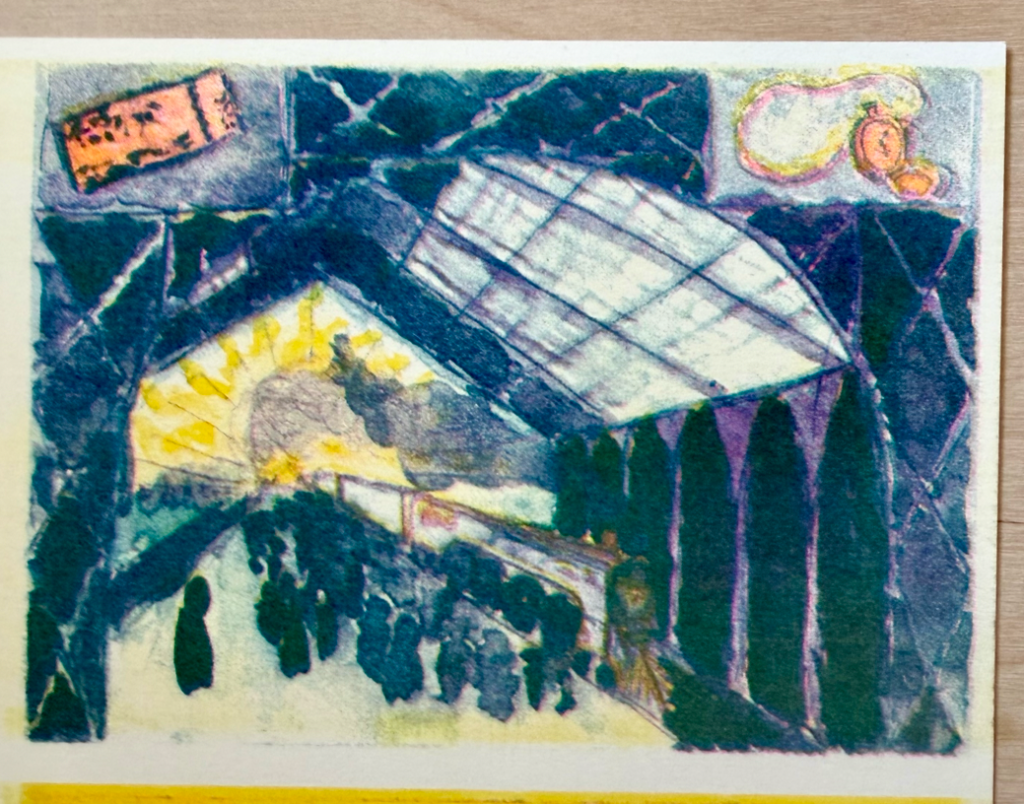
Prismatic Oracle’s main gameplay loop involves exploring different locations within the Temple of Prismos and selecting an artifact from each of them. The players will take turns rolling to determine the next location, encountering a new event that illustrates the temple’s magic upon their arrival. The players then each roll to determine a question that prompts them to select an aritfact to include in their logbook, envisioning a short scene of how the discovery comes about. Once all players have selected an aritfact and recorded it in their book, they proceed to a new location.
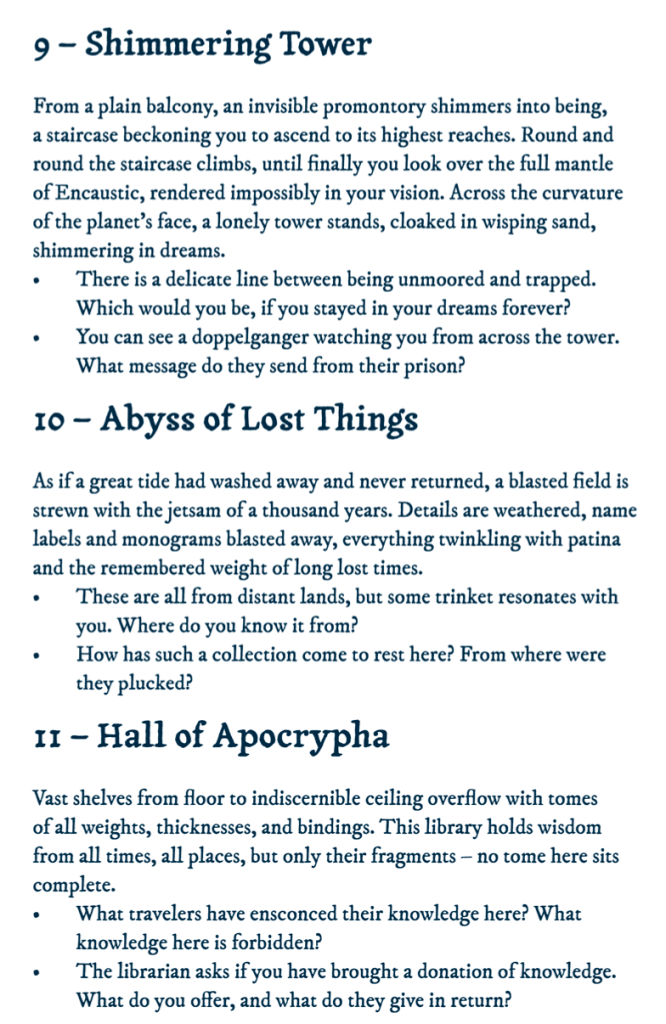
This loop is simple and straightforward. The thing that complicates it is the random sequence the locations are explored in and the interactions that inevitably arise between the different players’ artifacts and their interpretations of them. In playtests, a shared narrative comes about easily, as the players construct story beats prompted not only by the book but the other players’ decisions. The arcs of their characters naturally intertwine, called as they all are by the Prismatic Oracle to pursue an answer to a deeper truth.
I’m designing Prismatic Oracle with the intention that player will bring in parts from real life into the game – lines from their favorite book, clippings from a magazine, discarded trinkets, receipts, anything and everything people put in a junk journal – and as such the chief mechanical elements I offer are prompts for play. Dice rolls are a means to prompt the players to make narrative decisions, and a key component of that decision is the artifact you put into your junk journal. These prompts go beyond those explicitly offered in the text: each room’s illustration will contain offerings of artifacts, and I’m thinking about how the layout can contribute to a feeling of discovery and unraveling a hidden but ever-present truth.
Before the Oracle
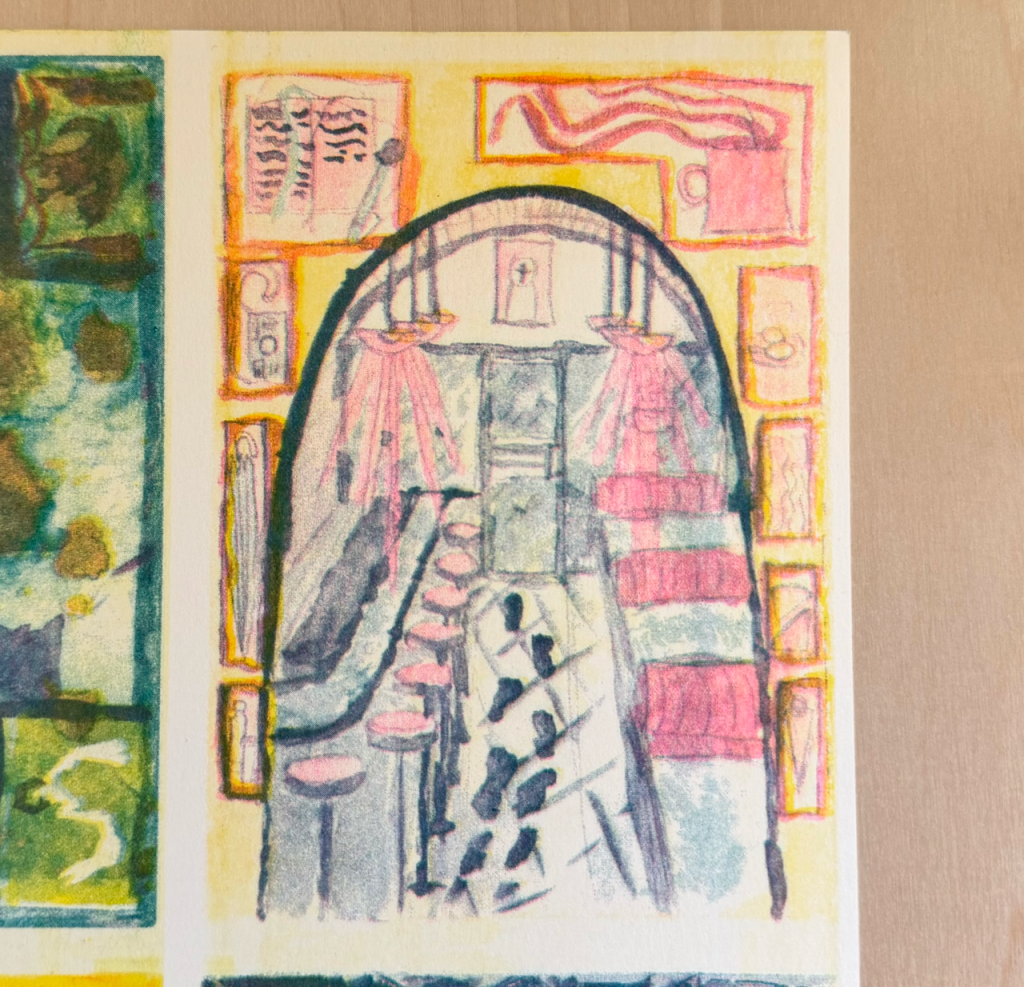
A central question hangs over The Prismatic Oracle: where did these artifacts come from? Why are the player’s characters, hundreds of years and light-years away from the origin of these artifacts, able to take hold of them? What, truly, is the magic of the temple, and can the visions it offers be trusted?
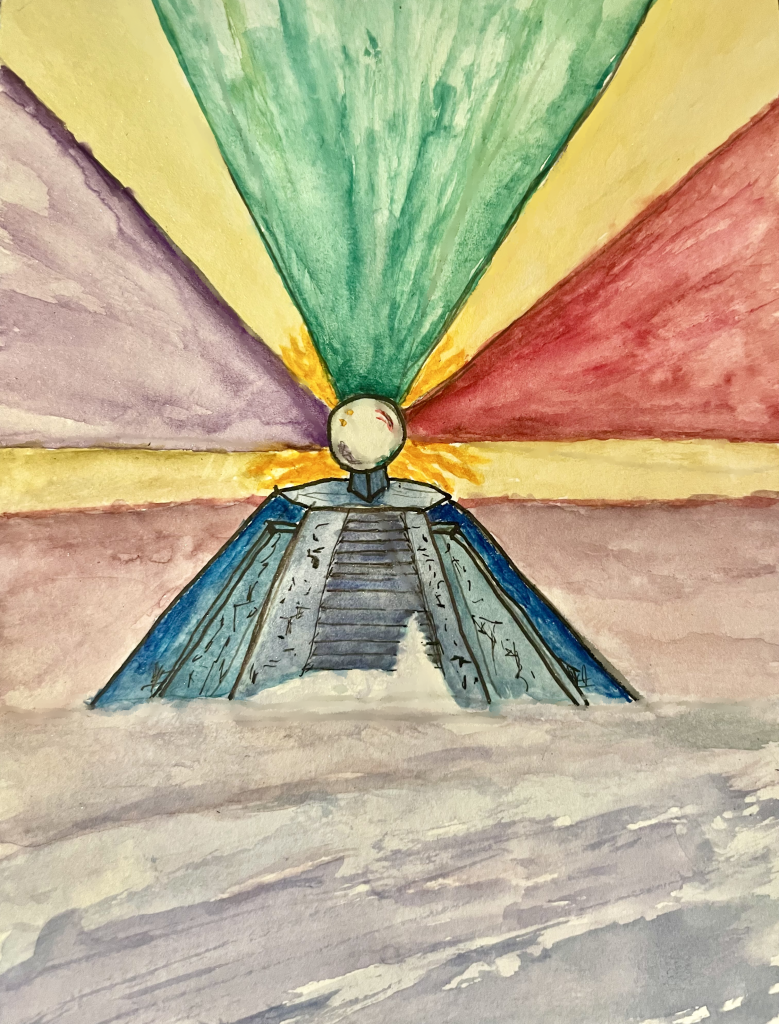
In the temple’s final, secret 13th chamber, the players will bring their books of artifacts before the Oracle and bear witness to its truth. The nature of the Oracle is indeterminate, up for the players and, perhaps, the dice, to decide, but its knowledge will help the players parse a vision of the future (or, perhaps, the past) from the artifacts they’ve gathered.
Artifacts, Memories, Ephemeral Beauty
Playing The Prismatic Oracle leaves every player with a physical artifact, an apocryphal tome that holds the artifacts they’ve gathered and the interpretations they’ve recorded. What do the players do with the apocrypha they’ve created? Do you combine each individual signature into a singular text, a comprehensive tome full of the beauties and contradictions of different hands at play? Do you send them on to other pilgrims seeking truth? Do you destroy them, the scraps of knowledge becoming artifacts that fuel further prophetic adventures? Do the secrets quietly conclude with the evening, or do the prophecies spark an entire host of new adventures?
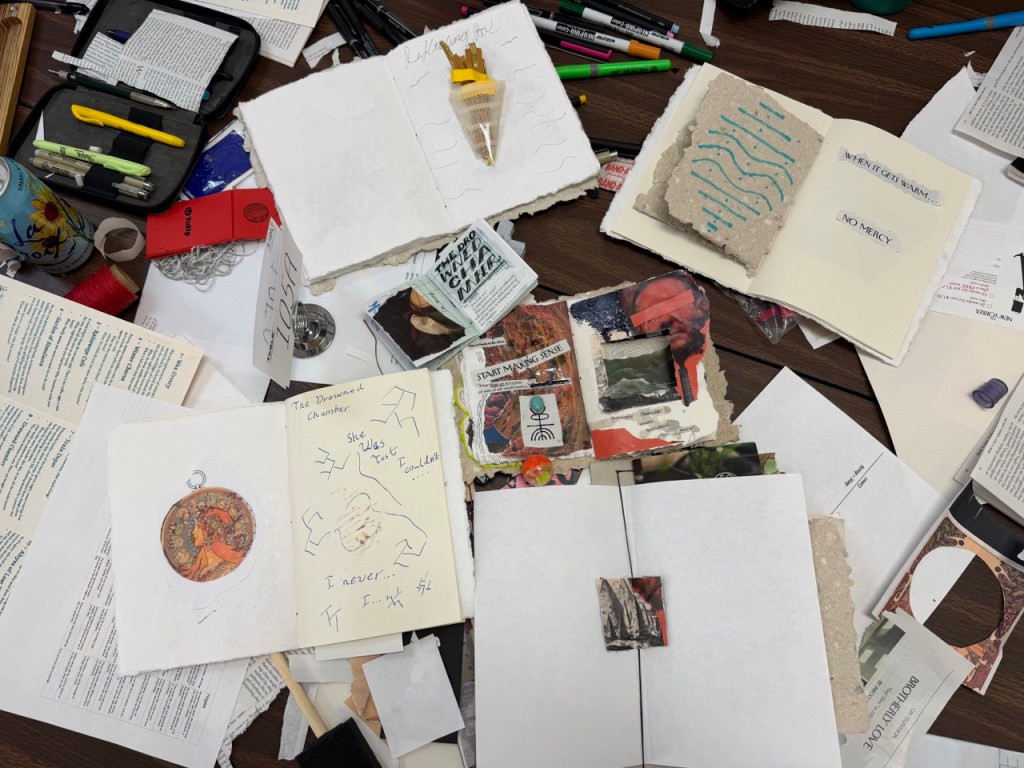
As soon as they are created, books and print media exist in a precarious state of slow decay. The written word feels more permanent, perhaps more likely to survive, than the spoken word, but is this so? The timescales are greater, perhaps, but books are still ephemeral, and they’ll degrade with the toil of the years like everything else. There is a real, meditative beauty to this, and Oracle implicitly asks its players what they do with this precariousness. Do you find meaning mostly from the doing of the thing in the moment of its creation, or the new meaning it takes on as it changes, degrades, perhaps finds new hands to make meaning with?
The game does not offer you answers here; they are up for you to decide. But I do hope that in the course of discovering your artifacts and filling your books with them, you find something that speaks to you, a spark that illuminates deeper truths, further adventures, and new and joyful ways of creating and telling stories together.
– Zosimos


Leave a Reply